

Last Updated: October 25, 2026
Quick Summary
Your commercial lock needs replacement when keys jam or break in the cylinder, handles wobble, the cylinder is rusted or pried, the door fails to latch, or the same lock has been serviced twice in twelve months. Any functional failure on a fire-rated or egress door means replace rather than repair.
- Inspect high-traffic doors quarterly and low-traffic doors annually to track lock wear.
- A second failure on the same lock within twelve months points to worn internal components.
- Rekey when hardware is sound but a former employee or tenant still holds a key.
- Photograph the label or stamp on the lock body before calling for service.
- Never swap a fire-rated exit device for a non-rated equivalent to save money.
Table of Contents
- Why a Failing Commercial Lock Is a Security and Safety Risk
- Signs Your Commercial Lock Needs Replacement
- Commercial Door Lock Repair or Replacement: How to Decide
- How Commercial Lock Lifespan Affects Your Replacement Timeline
- Rekey or Replace Commercial Locks: Key Control and Employee Turnover
- When to Plan Commercial Access Control Upgrades
- Schedule a Commercial Lock Inspection
- Frequently Asked Questions
Why a Failing Commercial Lock Is a Security and Safety Risk
A worn commercial lock is an open invitation. When a latch fails to throw fully or a cylinder turns too easily, the door protecting your inventory, records, and staff stops doing its job.
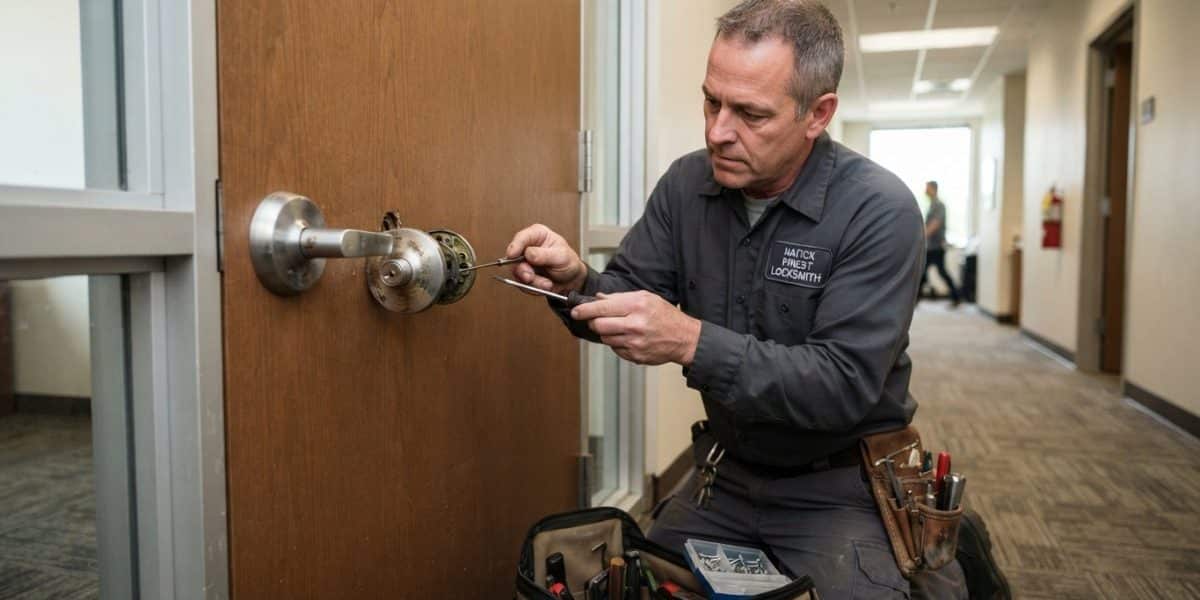
At Natick Finest Locksmith, we see this pattern constantly: a lock that “still works” gets ignored until a key snaps in the cylinder at 8 a.m. and a dozen employees wait on the sidewalk. The Occupational Safety and Health Administration guidance on exit routes is clear that exit doors must open reliably and without special effort.
The stakes split into two buckets:
- Security: a commercial lock with internal wear can be defeated with a credit card or a firm shove, and nobody notices until after a break-in.
- Safety and compliance: a door that will not latch, or will not release, creates a fire-egress problem and can trigger failed inspections.
Both problems start small and get expensive when ignored. Below are the eight warning signs we check first, then how to decide between repair and replacement.
Signs Your Commercial Lock Needs Replacement
One sign alone may mean a simple adjustment; two or more usually point to a lock nearing the end of its service life. Warning signs read differently by hardware type, so identify the lock type first.

Match the Symptom to the Lock Type
Mortise locks sit in a pocket cut into the door edge and are common on older office buildings, schools, and heavy-traffic entrances.
Cylindrical locks are the familiar round-bore lockset on interior office, storage, and back-of-house doors.
Exit devices, panic bars and push pads on egress doors, fail differently. The Occupational Safety and Health Administration guidance on exit routes requires exit doors to open without special effort, and a dragging panic bar violates that standard.
The Eight Mechanical Warning Signs
With the lock type in mind, here are the symptoms we check first on any commercial door.
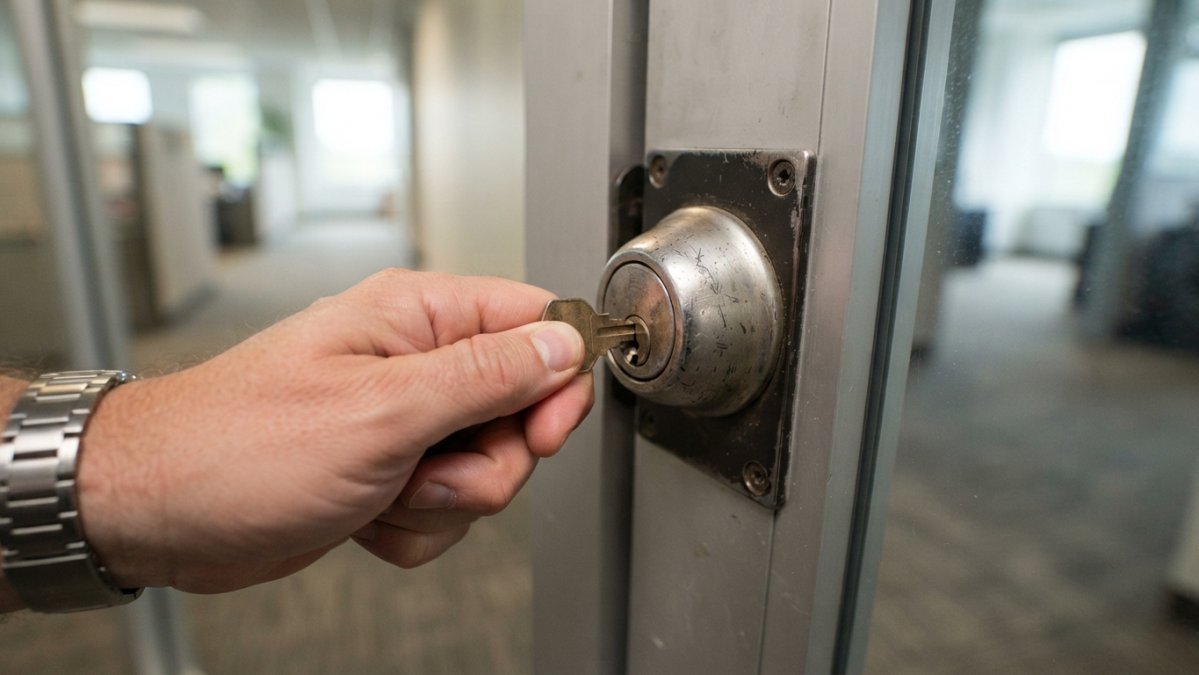
Difficulty inserting or turning the key. A key that catches, scrapes, or needs a wiggle means worn cylinder pins or a debris-packed keyway.
Keys jamming, sticking, or breaking in the cylinder. Jamming usually means internal cylinder wear or a bent key that no longer aligns with the pins.
Stiff, rough, or noisy lock operation. Grinding, clicking, or a lever that fights back signals internal spring and mechanism wear.
Cylinder damage, rust, or corrosion. Scratches, dents, prying marks, or rust around the cylinder are hard evidence.
Repeated repairs or rising repair costs. If the same door has needed service twice in a year, or repair bills keep climbing without a clear cause, the hardware is past its useful life. For deeper guidance on preventing recurring lock mechanism issues, see our dedicated article.
| Warning Sign | Likely Cause | Typical Fix |
|---|---|---|
| Key hard to insert or turn | Worn cylinder pins, debris | Cylinder service or replacement |
| Key jams or breaks | Internal wear, bent key | Cylinder replacement |
| Rough or noisy operation | Worn springs and mechanism | Lockset replacement |
| Loose handle or knob | Loose screws, worn spindle | Tighten, then replace if it returns |
| Rust or prying marks | Moisture, attempted break-in | Cylinder and hardware replacement |
| Door will not latch | Misalignment, worn latch | Strike plate and latch adjustment |
| Latch misses strike plate | Door movement, sagging hinges | Realignment, hinge service |
| Lever droops or deadbolt short-throws (mortise) | Worn mortise case | Case repair if parts exist, otherwise replace |
| Panic bar drags or sticks (exit device) | Worn exit device mechanism | Replace with same fire-rated device |
| Keypad or reader rejects valid credentials | Electronic module or reader fault | Diagnose access system, replace hardware |
Photograph the label or stamp on the lock body before you call for service. Commercial hardware is matched to door thickness, fire rating, and handing, and a photo saves a return trip when the technician arrives.
Commercial Door Lock Repair or Replacement: How to Decide
Repair makes sense for adjustment or debris: a misaligned strike plate, a loose screw, a dry cylinder. Replacement is right when internal parts are worn, the cylinder is damaged, or the lock has already failed once. Guessing wrong is paid twice, once for the failed repair and once for the replacement you should have done first.
A Four-Question Decision Framework
Work through these four questions in order. The first one that produces a clear answer usually settles the decision.
1. How severe is the failure? Cosmetic and adjustment issues, a loose strike plate, a dry cylinder, a handle that needs a screwdriver, are repair territory.
2. Has it failed before? A first-time adjustment is a repair.
3. Are replacement parts available? Mortise locks and older exit devices are the common sticking point.
4. What is the security and compliance exposure? Any lock on a fire-rated door, an egress door, or a door protecting high-value inventory or records should be replaced rather than patched once it shows functional failure.
Repair vs. Replace at a Glance
| Situation | Repair | Replace |
|---|---|---|
| Strike plate misaligned, latch still throws | Yes | No |
| Cylinder dry or dirty, key turns with effort | Yes (clean and lubricate) | No |
| Handle loose, screws tight | Yes (tighten and monitor) | No |
| Same lock serviced twice in 12 months | No | Yes |
| Cylinder worn, key jams repeatedly | No | Yes |
| Mortise case worn, parts still manufactured | Yes (rebuild) | No |
| Mortise case worn, model discontinued | No | Yes |
| Exit device drags or fails to latch | No | Yes (same fire rating) |
| Electronic reader or keypad fails intermittently | Diagnose first | Yes if fault recurs |
| Lock on fire-rated or egress door shows functional failure | No | Yes |
Do not replace a fire-rated exit device or mortise lock with a non-rated equivalent to save money. The door’s fire rating depends on listed hardware, and swapping in an unlisted device can void the assembly’s rating and fail inspection.
What Replacement Actually Involves
Replacement is not always a like-for-like swap. Door thickness, backset, handing, strike preparation, and fire rating all have to match, and a door prepped for one lock type may need minor modification for another. That is why the label check matters: it tells the technician what will fit before the door is taken apart. For a closer look at a same-day visit, see our guide to what to expect from same-day commercial lock repair. If you are weighing a full swap, our article on why professional lock installation matters covers the standards that separate a lock that lasts from one that fails early.
If the lock is on an egress or fire-rated door, or it has already been serviced twice in a year, replace it. For everything else, diagnose the specific component first, the framework above will tell you whether a repair will hold.
How Commercial Lock Lifespan Affects Your Replacement Timeline
Commercial lock lifespan depends on traffic, environment, and hardware grade. A high-traffic entrance lock wears far faster than a back-office door used twice a day. Locks exposed to weather, salt, and moisture corrode sooner than interior locks.
Rather than guess at a fixed number of years, track usage: inspect high-traffic doors quarterly and low-traffic doors annually. When a lock shows more than one warning sign from the list above, plan replacement on your schedule instead of waiting for a lockout to force it.
Rekey or Replace Commercial Locks: Key Control and Employee Turnover
Rekeying changes the pins so old keys stop working while the existing hardware stays; replacement swaps the whole lock. The choice comes down to hardware condition and key control.
Rekey when the hardware is sound but a tenant, employee, or contractor still holds a key. Replace when the lock is worn, damaged, or already showing the warning signs above. For property managers juggling turnover across multiple units, our guide to hiring locksmiths for property management explains how to build a rekeying schedule that keeps key control tight without disrupting tenants.
When to Plan Commercial Access Control Upgrades
Electronic and smart locks add their own warning signs: keypads that stop responding, batteries that drain fast, credentials that fail intermittently, and audit logs that stop recording, easy to miss because the door may still open manually.
If your building already relies on keypads, fobs, or app-based entry, treat recurring electronic faults as a replacement signal. Access control upgrades also solve the key control problem permanently, since you can revoke a departed employee’s access in seconds instead of rekeying every door.
Schedule a Commercial Lock Inspection
The cheapest lock failure is the one you catch before it happens. A short inspection identifies worn cylinders, misaligned strike plates, and loose hardware while they are still minor fixes.
Our well-trained technicians handle commercial-grade lock installation, master key systems, mailbox lock changes, and lockouts, with same-day service and the tools on hand to finish the job in one visit. If you have spotted any of the signs above, do not wait for a jammed lock to shut down your entrance. Explore our commercial locksmith services and get an inspection scheduled before the next busy morning.
Frequently Asked Questions
What is the average lifespan of a commercial lock?
Most commercial-grade locks last 10 to 15 years with regular use, though high-traffic doors can wear out faster. Cylinders in entrances used dozens of times a day often show internal wear within 5 to 7 years. Factors like weather exposure, key quality, and whether the lock has been lubricated all shorten or extend that timeline. If your building’s locks are past that window and showing stiff keys or loose levers, a commercial lock inspection is the fastest way to confirm whether replacement is due.
Should I repair or replace a malfunctioning commercial lock?
Repair usually makes sense when the problem is isolated, like a misaligned strike plate or a loose handle that just needs tightening. Replacement is the better call when the cylinder is worn, keys jam repeatedly, or the hardware is past its commercial lock lifespan. A repair-versus-replacement decision framework weighs repair cost against the risk of repeat failures and downtime. If a lock has failed more than once in a year, replacement typically costs less over time than repeated service calls.
Can a locksmith rekey a commercial lock instead of replacing it?
Yes. Rekeying swaps the internal pins so old keys stop working while the existing hardware stays in place. It is the standard move after employee turnover, a lost master key, or a tenant change, because it restores key control without the cost of new locksets. Rekeying only works if the lock body and cylinder are still in good condition. If the cylinder is corroded or the mechanism is loose, replacement is the safer choice.
Are keyless locks a good choice for commercial buildings?
Electronic and smart locks suit offices with high turnover or multiple entry points, since you can revoke a departed employee’s access in seconds instead of rekeying. The tradeoffs are real: batteries fail, software needs updates, and fire-egress doors must still release freely under NFPA 101. Many buildings run a hybrid, keeping mechanical locks on fire exits and access control on main entrances. Warning signs like dead batteries, sync failures, or audit logs that stop recording mean it is time to service or upgrade the system.
A single sticking key is easy to ignore until it strands your team at the door. Natick Finest Locksmith offers immediate response, experienced technicians, and same-day service built around commercial lock repair and replacement, so a failing lock gets fixed before it becomes a security or safety problem. Get started with Natick Finest Locksmith and put a proper inspection on the calendar this week.

