

Table of Contents
- Why Property Locksmiths Are a Core Vendor, Not a One-Off Call
- How to Vet a Locksmith Vendor: Licensing, Insurance, and Contractor Vetting
- Building a Locksmith Vendor Agreement Template That Protects You
- Rekeying Rental Property Costs: Budgeting for Tenant Turnover and Key Duplication
- Access Control Systems for Multi-Family Housing: Smart Locks, Master Key Systems, and Key Management
- Emergency Lockout Response and SLA Frameworks for Property Portfolios
- Security Audits, Compliance, and Liability Reduction for Rental Properties
- Conclusion: Choosing a Locksmith Partner for the Long Term
- Frequently Asked Questions
Last Updated: September 30, 2026
Why Property Locksmiths Are a Core Vendor, Not a One-Off Call
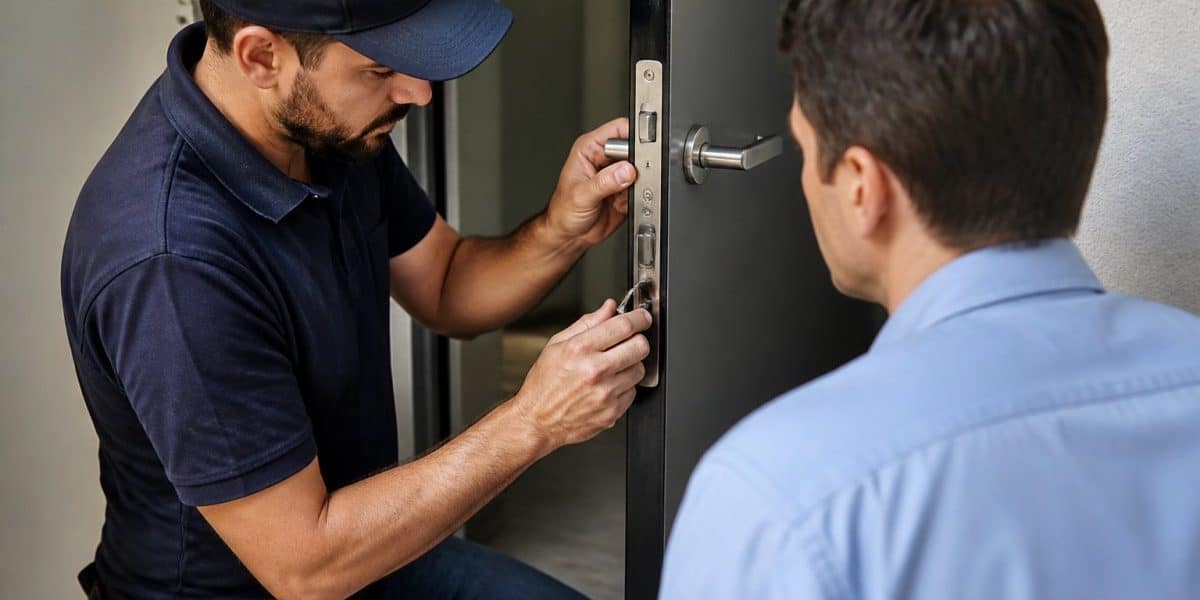
Hiring locksmiths for property management works best when you treat the locksmith as a standing vendor, not a number you call after a break-in. A single bad lockout can cost you a tenant, a lease, and a weekend. A steady partner prevents most of that.
The reason is simple. Every turnover needs rekeying. Every lost key is a security risk. Every jammed deadbolt is a liability claim waiting to happen.
So the question isn’t whether you need a locksmith. It’s whether you have one you can rely on before the emergency hits.
How to Vet a Locksmith Vendor: Licensing, Insurance, and Contractor Vetting
Vetting a locksmith vendor is a risk-transfer exercise. You are confirming that the license, the insurance, and the business record all shift liability away from your property and onto the contractor. Most property managers collect the paperwork and never read it. That is where claims come from.
Licensing. Locksmith licensing is handled at the state level, and roughly half the states have no statewide licensing requirement at all. Where a license exists, verify it directly with the state board or the regulator that oversees locksmiths or alarm contractors, not through a badge image on the vendor’s website. Confirm three things: the license is active, the legal business name matches the entity on your contract, and the license covers the class of work you need (some states separate lock work from alarm and access control work).
Insurance. This is the part most vetting checklists get wrong. “Proof of insurance” is not enough. You want to see the actual certificate of insurance (COI) and confirm these coverages:
- Commercial general liability (CGL). Covers third-party bodily injury and property damage, a technician cracking a tenant’s door frame, or a visitor tripping over a tool bag in a common hallway. Confirm the policy is current and note the per-occurrence and aggregate limits.
- Workers’ compensation. If a technician is injured on your property and the vendor has no workers’ comp, the injury can route back to you as a premises liability claim. In most states, any vendor with employees is legally required to carry it. Ask for the policy and confirm it lists the state where your property sits.
- Commercial auto. Technicians drive to your sites. If a vendor vehicle damages a gate, garage door, or parked tenant car, commercial auto is what responds.
- Fidelity bond or employee dishonesty coverage. This is the coverage almost no property manager asks for and almost every one needs. A bond covers theft by the vendor’s own employees, missing keys, stolen tools, or property taken during a service call. If your locksmith holds master keys to your buildings, a bond is not optional.
- Additional insured endorsement. Ask to be named as an additional insured on the CGL policy. This gives you direct rights under the vendor’s policy instead of waiting for the vendor to file a claim on your behalf.
Contractor vetting. Run these checks before adding any vendor to your approved list:
- Verify the license number with the state board or regulator
- Request a certificate of insurance naming your property entity as additional insured
- Confirm workers’ compensation and fidelity bond coverage in writing
- Confirm a physical business address (not a mailbox or a mobile-only operation)
- Ask for two property manager references with portfolios of similar size
- Check for complaints with your state consumer protection office and the Better Business Bureau
- Confirm the vendor runs background checks on technicians who will hold keys
A common mistake is skipping the insurance and bond check because the price looks good. The cheap vendor is rarely cheap once a claim lands, and an unbonded vendor holding your master keys is an uninsured theft risk you cannot recover from.
Hiring an uninsured or unbonded locksmith shifts damage, injury, and theft risk onto your property. One broken door frame, one technician injury, or one missing master key can become your claim, and your insurance premium, instead of theirs.
Verify a locksmith or alarm contractor license with your state regulator
Building a Locksmith Vendor Agreement Template That Protects You
A locksmith vendor agreement template locks in response times, pricing structure, and liability terms before you need them. Without one, every job becomes a negotiation.
Build your template around these sections:
- Scope of work. List the services covered: rekeying, lock replacement, deadbolt installation, emergency lockout, and lock maintenance.
- Response times. Set a standard window for routine jobs and a faster one for emergencies.
- Pricing structure. Define how you’re billed. Flat rates for standard jobs, hourly for custom work.
- Insurance and liability. Require proof of coverage and name your entity as additional insured.
- Key control. State who handles keys, how they’re tracked, and what happens when they’re lost.
- Termination terms. Include a notice period and a process for ending the agreement.
Two clauses most templates miss: a cap on emergency call-out fees, and a clause covering after-hours work. Both protect your budget when something breaks at 2 a.m.
Rekeying Rental Property Costs: Budgeting for Tenant Turnover and Key Duplication
Rekeying rental property costs depend on lock type, unit count, and how fast you need it done. A single-cylinder deadbolt rekey is the cheapest option. Replacing the lock entirely costs more but gives you a fresh cylinder.
Budget for these recurring items:
| Item | When It Applies | Budget Driver |
|---|---|---|
| Standard rekey | Every turnover | Number of cylinders per unit |
| Lock replacement | Worn or damaged hardware | Lock grade and finish |
| Key duplication | New tenant move-in | Number of copies issued |
| Master key update | New unit added to system | System size |
| Emergency lockout | Tenant lockout or lost key | Time of day |
Key duplication is where small costs add up. Every copy you hand out is a copy you can’t track.
Schedule rekeys in batches during turnover season. Grouping units cuts travel time and keeps your per-unit cost down compared to one-off calls.
Access Control Systems for Multi-Family Housing: Smart Locks, Master Key Systems, and Key Management
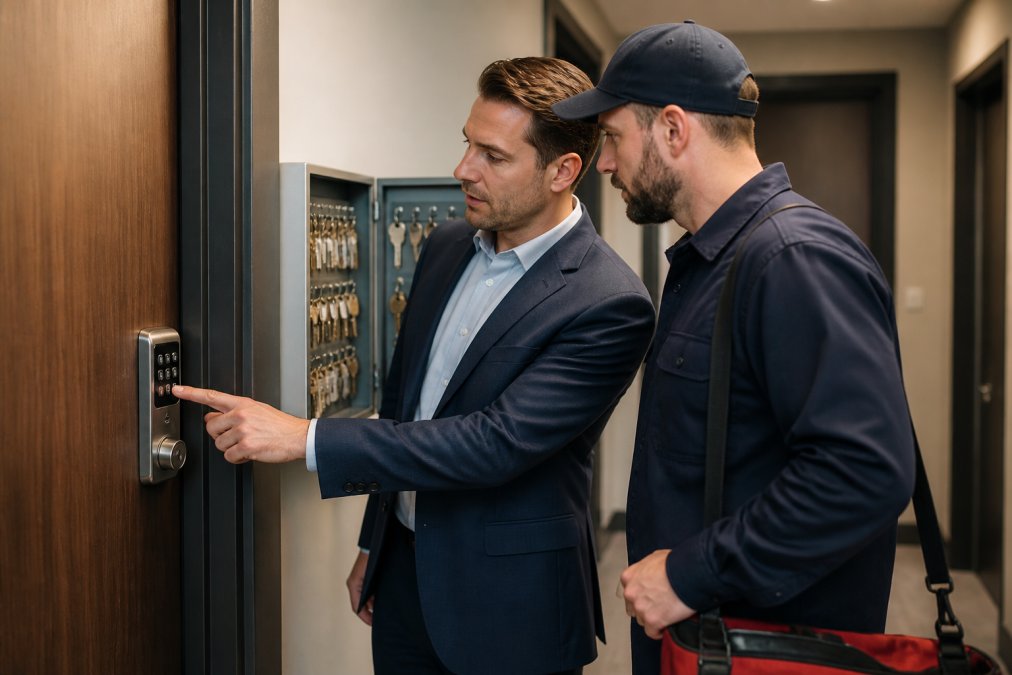
Access control systems for multi-family housing replace a ring of loose keys with a system you can actually manage. Smart locks, master key systems, and key tracking software each solve a different part of the problem.

Emergency Lockout Response and SLA Frameworks for Property Portfolios
An SLA framework turns “we’ll get there fast” into a written, measurable commitment. That is the difference between a vendor and a partner, and it is the single highest-leverage document a property manager can put in front of a locksmith.
Core SLA terms to define:
- Standard response time for routine lock work, a defined window, not “same day.”
- Emergency response time for lockouts and security breaches, a shorter, separately defined window.
- Availability windows covering nights, weekends, and holidays, with a named after-hours contact.
- On-site vs. resolution time. Distinguish between when a technician arrives and when the lock is functional. A vendor can hit the first and miss the second.
- Escalation path if the first technician cannot resolve the issue, including a named supervisor and a direct number.
- Penalties or service credits if response times are missed. Without a consequence, the SLA is a suggestion.
- Reporting cadence. Require a monthly report of response times, jobs completed, and any missed windows so you can hold the vendor accountable with data.
Put your SLA response windows in writing and test them once before you sign. Submit a routine work order and time the response yourself. Vendors that miss the test rarely improve after the contract is signed.
Security Audits, Compliance, and Liability Reduction for Rental Properties
A security audit checks your locks, lighting, and access points against current standards. It’s the cheapest way to reduce liability before an incident forces the issue.
- Deadbolt function and strike plate security
- Door frame integrity and hinge screws
- Window locks on ground-floor units
- Common area lighting and entry points
- Key tracking records and duplicate counts
A documented security audit does two things: it prevents incidents, and it protects you if one happens anyway.
Conclusion: Choosing a Locksmith Partner for the Long Term
The hard part isn’t finding a locksmith. It’s finding one that answers at 2 a.m., shows up when promised, and does work that holds up months later.
Frequently Asked Questions
What criteria should property managers use to vet locksmith vendors?
Start with licensing and insurance verification. Ask for a certificate of insurance showing general liability and workers’ compensation coverage, then confirm the license number with the state. Check for a physical business address, written estimates, and references from other property managers. Review their response time guarantees and whether they offer a written service level agreement. A locksmith who hesitates to provide documentation is a red flag for property locksmiths work.
How do locksmiths handle emergency lockout requests for property managers?
Reputable locksmiths offer 24/7 emergency lockout services with defined response windows. They verify tenant identity through lease documents or manager authorization before opening any unit. For property portfolios, set up a priority account so dispatchers recognize your address and billing details immediately. Ask about after-hours rates upfront and confirm whether emergency calls count toward any monthly service minimum.
Should property managers use a single locksmith contractor or multiple vendors?
A single dedicated locksmith partner simplifies vendor management, keeps key control consistent, and often earns you bulk pricing on rekeying and hardware upgrades. Multiple vendors can create keying conflicts and inconsistent documentation. The exception is geographic spread: if your properties span distant areas, one primary vendor plus a backup for remote sites works well. Always have a backup listed in your locksmith vendor agreement template so emergency lockout coverage never depends on one company’s availability.
What is the typical turnaround time for rekeying a rental unit?
A standard rekey can typically be completed efficiently per unit. For a full turnover, scheduling all units in one visit reduces labor costs and downtime. During peak leasing season, book rekeying at least a week ahead. If you manage a large property portfolio, ask about batch scheduling so tenant turnover rekeying happens the same day keys are returned, closing the gap when old keys could still work.