

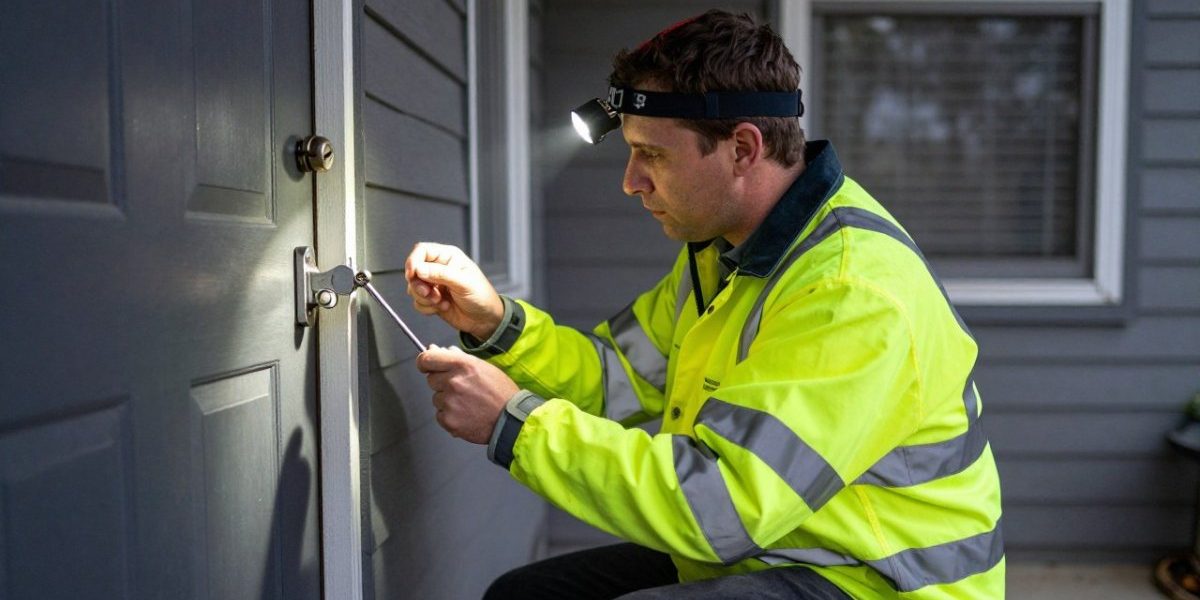
Last Updated: November 19, 2026
Quick Summary
If you are locked out at night, stay in a well-lit, visible spot and avoid dark side yards, then check every door, deadbolt, garage keypad and reachable ground-floor window before calling anyone. If no spare key holder can reach you, call a vetted 24 hour locksmith and confirm the total price before work starts.
- Take three slow breaths and skip risky shortcuts like forcing a window or climbing to a balcony.
- Call the person who holds your spare key before you call a locksmith.
- Ask the dispatcher for a realistic arrival window and a total price estimate before work begins.
- Be cautious with anyone who demands cash only or payment before the door is open.
- If you rent, call your landlord or property manager first, since many leases require it.
Table of Contents
- Your First Five Minutes: Safety Steps Before Anything Else
- Check Every Entry Point Before You Panic
- Locked Out of House No Key: Call Your Spare Key Holder First
- When to Call a 24 Hour Locksmith Instead of Waiting
- Emergency Locksmith Response Time: What to Expect
- Emergency Locksmith Cost: What Drives the Bill
- DIY Entry Methods and Why Most of Them Backfire
- Renters, Landlords, and Property Managers: Who Handles the Lockout
- Frequently Asked Questions
Your First Five Minutes: Safety Steps Before Anything Else
Being locked out at night is stressful, but the first few minutes matter most for your safety. If you are locked out at night, the priority is to stay visible, stay calm, and avoid making a bad situation worse.

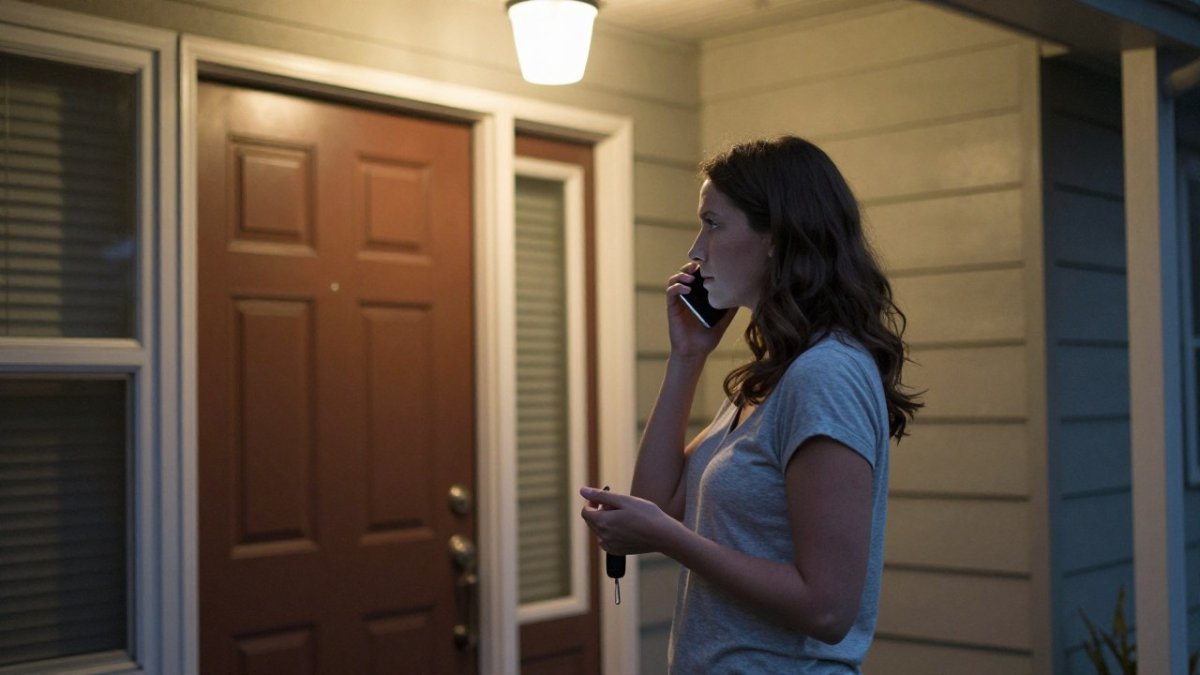
Here is the most important thing to understand before anything else: the dark is not your enemy, panic is. Most lockout injuries and lockout scams happen because someone rushed. Slow down and work the steps.
Stay in a well-lit, visible spot
Move to the brightest place you can reach: a porch light, a streetlamp, a neighbor’s driveway. Visibility deters opportunistic crime and lets a locksmith or police officer find you quickly. Avoid dark side yards and back corners where no one can see you.
Ground yourself and slow down
Take three slow breaths and name what you know: your phone works, you are at your own address, and help exists. Panic makes people try dangerous shortcuts like forcing a window or climbing to a second-floor balcony. Neither is worth the risk of a fall or an injury. A calm person makes better decisions, and better decisions get you back inside faster.
Here is the safety sequence to follow in the first minutes of a night lockout.
| Step | What to do | Why it matters |
|---|---|---|
| Stay visible | Move to a porch light, streetlamp, or neighbor’s driveway | Deters crime and helps a locksmith or officer find you |
| Avoid dark spots | Skip dark side yards and back corners | No one can see you there |
| Ground yourself | Take three slow breaths and name what you know | Panic leads to dangerous shortcuts |
| Skip risky shortcuts | Do not force a window or climb to a balcony | Fall or injury risk is not worth it |
Check Every Entry Point Before You Panic
Before you call anyone, walk the perimeter and check every entry point. A surprising number of lockouts end with a door that was never actually locked.
Doors, deadbolts, and garage doors
Check the front door, the back door, and any side door. Push the knob and turn it fully. Test the deadbolt from the outside, because some deadbolts can be left in an unlocked position even when the door is shut. If you have a garage door, try the keypad or the manual release. A garage door left open, or a keypad with a dead battery, changes your whole plan.
Ground floor windows and keypads
Test ground floor windows for a latch that was left open. Do not force anything. This is a check, not a break-in. If you have a keypad lock, try your code slowly and watch for a low-battery warning. A keypad that beeps oddly or flashes is usually a battery issue, not a lock failure.
Locked Out of House No Key: Call Your Spare Key Holder First
If you are locked out of house no key in hand, your spare key holder is the fastest, cheapest solution. Call the person who holds your spare key before you call a locksmith. That might be a neighbor, a family member, or a friend nearby.
A few practical notes on spare keys:
- Keep at least one spare key with someone who lives close enough to reach you at night.
- Tell your spare key holder where the key is kept and how to reach you.
- If your spare key is hidden outside, move it. Thieves know every hiding spot, from the fake rock to the flowerpot.
If your spare key holder cannot get there within a reasonable time, move to the next step.
When to Call a 24 Hour Locksmith Instead of Waiting
Call a 24 hour locksmith when no spare key is reachable, when you have children or pets inside, when the weather is dangerous, or when you feel unsafe waiting outside. Do not wait hours on a doorstep when a professional can open the door without damage.
If you have decided to call for help, you can view our lockout service and request assistance.
How to vet a legitimate locksmith before they arrive
Scam locksmiths target people in exactly your situation: it is late, you are outside, and you will pay almost anything to get in. Vet the company before the van pulls up, and keep vetting when it arrives.
Before you dial, or while you wait:
- Search the business name plus your state and the word “license.” Many states regulate locksmiths through a licensing board, and a legitimate company should be able to provide licensing details that match the name on its vehicle. If the dispatcher cannot or will not provide one, end the call.
- Ask for the company’s physical business address, not just a phone number. A call center that routes to whichever technician is closest is a red flag; a local shop with a storefront you could visit is not.
- Ask whether the technician carries general liability insurance. A company that hesitates on this question is telling you something.
When the technician arrives:
- Ask to see identification and the state locksmith license if your state issues one.
- Confirm the price again before any tool touches the lock. The number on site should match the number on the phone.
- Watch the work. A technician who asks you to step away, or who immediately declares the lock must be drilled and replaced without trying a non-destructive opening first, is running the classic upsell.
For more detailed guidance while you wait, read how to find a reliable local locksmith and how to verify locksmith credentials before you let anyone touch your door.
Emergency Locksmith Response Time: What to Expect
A legitimate emergency locksmith should give you a realistic arrival window when you call. Ask directly: “How long until a technician reaches my address?” A reputable company will give you a clear answer and call if anything changes.
Response time depends on your location, traffic, and the time of night. For a fuller picture of what a fair arrival window looks like, read our guide to emergency lockout response time expectations.
Emergency Locksmith Cost: What Drives the Bill
Pricing depends on factors such as the time of day, the type of lock, and the work required. For current pricing or a quote, visit the Natick Finest Locksmith website.
Ask for the total before work begins, including any service fee and after-hours charge. For a full breakdown of the fees to watch for, see our guide to avoiding hidden locksmith service fees.
Insurance and roadside assistance coverage
Check your homeowners or renters insurance policy and any roadside assistance membership. Some policies cover lock replacement after a break-in, and some auto clubs cover home lockouts as part of a membership. Coverage varies widely, so read the terms or call your provider rather than assuming.
DIY Entry Methods and Why Most of Them Backfire
Most DIY entry methods are not worth the risk, but the reason matters: the method that works depends entirely on the hardware on your door, and using the wrong method on the wrong lock is how people turn a lockout into a repair bill. Here is what actually happens with each common approach.
The credit card trick
A flexible card can slip the latch on a spring-latch knob or lever lock that was closed but not deadbolted. It does not work on a deadbolt, and it does not work on a door with a security strike plate or an anti-slip latch. On modern doors it usually just bends the card and scuffs the frame.
The bobby pin and tension wrench
Picking a standard pin-tumbler lock with improvised tools is a skill, not a trick. People who have never picked a lock usually bend the pins or leave the cylinder jammed, which turns a simple opening into a cylinder replacement. It also takes far longer than most people expect, and doing it on a dark porch at night is a bad learning environment.
The bump key
Bumping works on many standard pin-tumbler locks, but it requires a bump key cut for your lock’s keyway, and it can damage the pins if done repeatedly or with too much force. It is not a technique to attempt for the first time on your own front door at midnight.
Forcing a window or a secondary door
This is where lockouts cause real losses. Prying a ground-floor window can crack the glass, bend the frame, and trip a security system, and climbing to a second-floor window or balcony is a fall hazard. Emergency departments see these injuries regularly. The repair and medical costs dwarf a professional lockout service.
What is actually safe to try yourself
- Confirm the door is truly locked, not just stuck. Push the knob and turn it fully, and test the deadbolt from the outside.
- Try every other entry point first: back door, side door, garage keypad, and any ground-floor window with a latch you can reach safely from the ground.
- If you have a smart lock, try the keypad slowly and watch for a low-battery warning before assuming the lock has failed. A keypad that beeps oddly or flashes is usually a battery issue, not a lock failure.
Watch out: if the door has a deadbolt, a smart lock, or a keypad, stop and call a technician.
If you have already tried and failed, tell the locksmith what you attempted. A technician who knows the cylinder may have been bumped or picked can check for damage before opening, which saves you a second service call.
Renters, Landlords, and Property Managers: Who Handles the Lockout
If you rent, call your landlord or property manager first.
If your landlord will not help or cannot be reached, a professional locksmith can open the door. If you want to change the locks yourself, check your lease first, because some leases restrict tenant lock changes.
A lockout at night is manageable when you stay visible, stay calm, and work through the steps in order.
Frequently Asked Questions
What should I do first if I’m locked out at night?
Move to a well-lit, visible spot and take a breath before you try anything. Check every entry point once, including the back door, garage door, and ground floor windows, in case one was left unlocked. Then call your spare key holder. If no one can reach you within a reasonable window, call a 24 hour locksmith and confirm the total price before they dispatch.
Can the police help if I’m locked out of my house?
Police departments generally do not unlock homes for residents; that is not a service they provide. They may respond if there is a genuine emergency inside, such as a child or pet in danger, or a suspected break-in. For a standard residential lockout, your options are a spare key holder or a licensed locksmith. Calling the non-emergency line to ask about local practice costs nothing and takes a minute.
How much does an emergency locksmith cost?
Emergency locksmith cost depends on the time of night, the lock type, and whether the technician has to drill or replace hardware. Pricing depends on the time of night, the lock type, and the work required. For current pricing or a quote, visit the Natick Finest Locksmith website.
How long should I expect to wait for a locksmith?
Emergency locksmith response time varies by area and time of day. A local provider should give you an arrival window when you call. Ask them to confirm it in writing by text. If the window passes with no update, call back and ask for a status. A provider that cannot give you a concrete window at 2 a.m. is worth replacing with one that can.

