

Last Updated: October 23, 2026
Quick Summary
Residential lock changes are code compliant when the new hardware keeps the door safe to exit, meets local building and fire rules, and respects your lease. Codes regulate exits rather than locks, so a lock is compliant if it opens from the inside without a key, tool, or special knowledge.
- Every lock must open from the inside without a key, tool, or special knowledge.
- Double-cylinder deadbolts need a key to exit and many codes restrict them on sleeping-area doors.
- A one-inch bolt throw is the common industry benchmark for a full deadbolt.
- Renters usually need written landlord permission before changing or rekeying a lock.
- Fire-rated doors must keep their rating, so the lock must be listed for that assembly.
Table of Contents
- Are Residential Lock Changes Code Compliant? What You Need to Know
- Door Lock Egress Requirements: Ensuring Safe Emergency Exits
- Deadbolt Code Requirements for Residential Doors
- Smart Lock Building Code Requirements: What to Verify
- Tenant Changing Locks Landlord Permission: Lease and Legal Rules
- How to Verify Compliance: A Step-by-Step Checklist
- Property Types and Lock Changes: Homes, Apartments, Condos, and Bedrooms
- Conclusion: Making Safe and Compliant Lock Changes
- Frequently Asked Questions
Are Residential Lock Changes Code Compliant? What You Need to Know
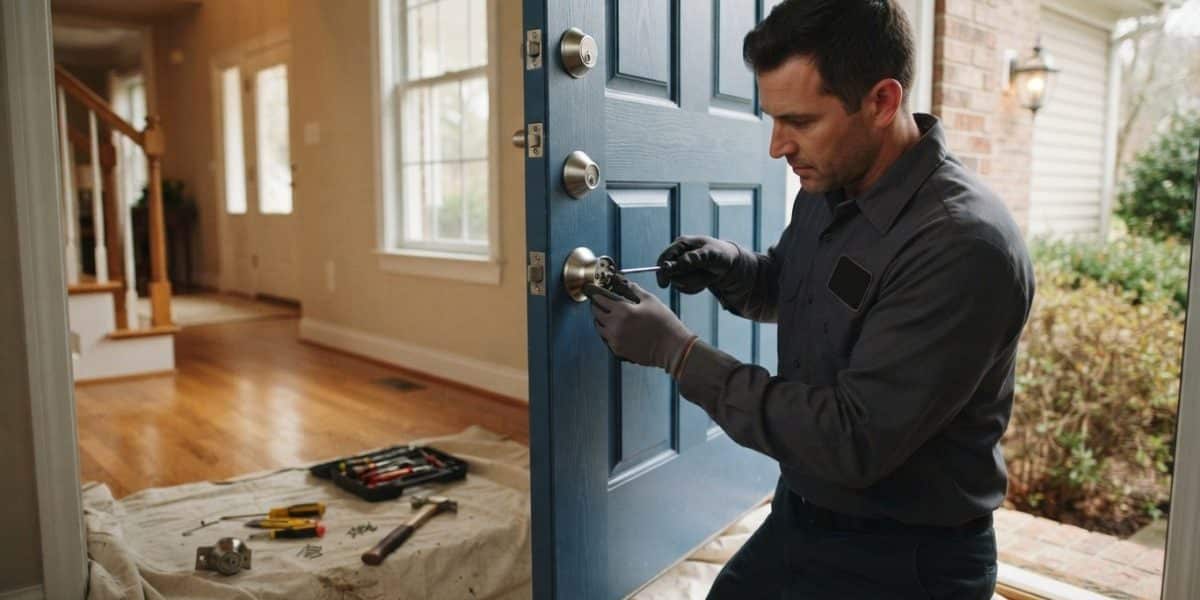
Residential lock changes are code compliant when the new hardware keeps the door safe to exit, meets local building and fire rules, and respects your lease. The short answer: the lock itself rarely breaks code, but how it’s installed and which door it’s on can. At Natick Finest Locksmith, we can tell you that most problems come from the wrong lock on the wrong door, not from the act of changing it.
Here’s the key point most guides miss. Codes don’t regulate locks. They regulate exits. A lock is compliant if it lets people get out fast and doesn’t trap anyone inside.
So the real question isn’t “can I change my lock?” It’s “does this lock keep my door a legal, safe exit?” Below, we break down the rules by door type, the lease issues renters face, and a checklist you can run before you buy any hardware.
Door Lock Egress Requirements: Ensuring Safe Emergency Exits
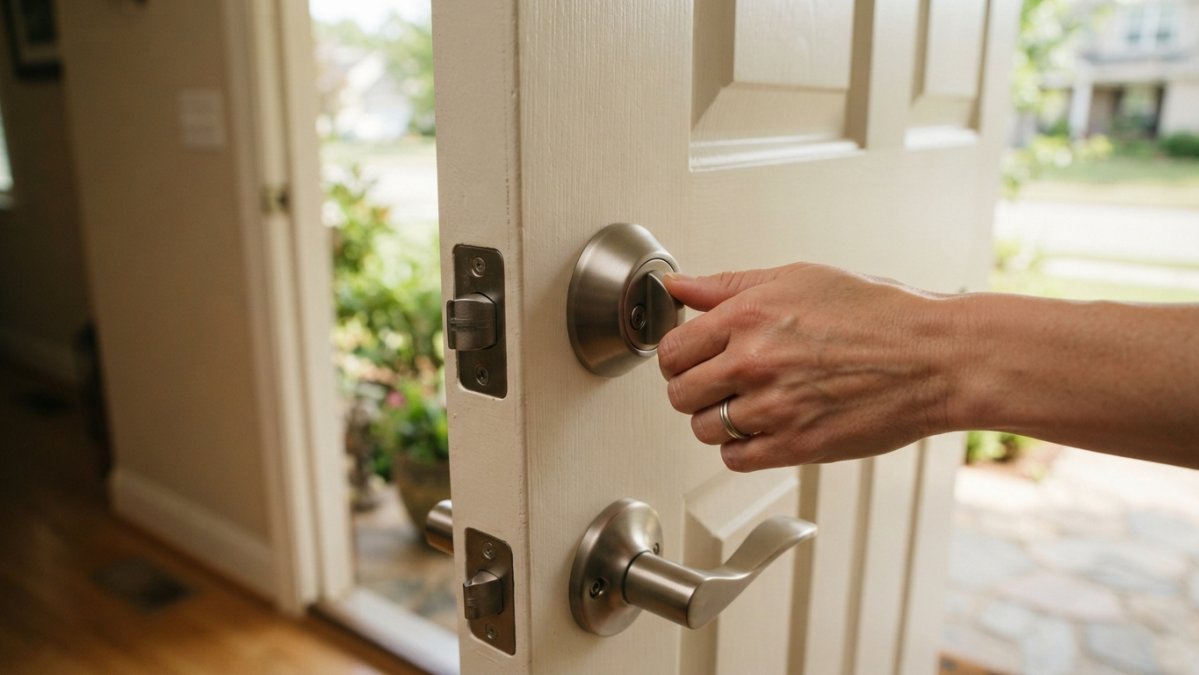
Door lock egress requirements mean every lock must open from the inside without a key, tool, or special knowledge. That is the core rule behind most residential door code.

The International Code Council’s residential building code resources treat egress as a life-safety issue. A door you can’t open quickly in a fire is a hazard, no matter how secure it is.
What this means in practice:
- Thumb-turn deadbolts on the inside are fine. You turn the knob and walk out.
- Double-cylinder deadbolts (key on both sides) are the problem. You need a key to get out. Many codes restrict these on sleeping-area doors.
- Keyless exit must work without special effort.
A common mistake is adding a double-cylinder deadbolt to a front door for extra security. It looks tough, but it can fail an inspection or slow an escape. If you want that security, keep a key nearby, but know the risk.
Deadbolt Code Requirements for Residential Doors
Deadbolt code requirements for residential doors are less about the bolt and more about the assembly: the bolt throw, the strike, the door slab, and the frame all have to work together.
The model residential code most states adopt or adapt is the International Residential Code (IRC), published by the International Code Council. The IRC’s egress provisions (Chapter 3, Section R311 in recent editions) set the exit requirements, and the exterior door provisions address landings, thresholds, and door operation.
Here is what to verify on the hardware itself:
- Bolt throw: A one-inch throw is the common industry benchmark for a full deadbolt, and many builders and inspectors treat it as the practical minimum. A five-eighths-inch throw is a spring latch, not a deadbolt, and offers far less resistance to a kick or pry.
- Strike plate: A standard residential strike is often secured with two short screws into the jamb trim. A reinforced strike with screws long enough to reach the wall framing (commonly three-inch screws) is the stronger and more inspection-friendly choice. This is the single most common weak point on older doors.
- Door slab: Hollow-core and thin-panel doors do not hold a deadbolt reliably. Solid wood, solid-core, or reinforced slabs do. On a fire-rated door, the slab and the lock must both carry the rating.
- Backset: Two-and-three-eighths inches and two-and-three-quarters inches are the standard backsets. Odd backsets need matching hardware, and a mismatched install can leave the bolt misaligned with the strike.
- Reinforcement: A wrap plate or a security strike adds resistance without changing the lock. It is a low-cost upgrade that also helps a marginal install pass a functional test.
A deadbolt can meet the letter of the code and still be a poor install. If the strike plate is loose, the hole is oversized, or the bolt does not fully seat, the lock will not protect you.
Short screws into soft trim are the most common weak point we find on older doors, and swapping them for longer screws into the framing is a quick, code-friendly fix.
One more distinction matters for compliance: a deadbolt on an exterior door is a security device, but a deadbolt on a sleeping-room door is an egress device. The same hardware can be compliant in one location and a violation in another, which is why the door type has to be settled before the lock is chosen.
Smart Lock Building Code Requirements: What to Verify
Smart lock building code requirements come down to one test: can the door still open from the inside without power, a phone, or a code? If yes, the smart lock is usually fine.
Smart locks add convenience, but they add failure points. Check these before you buy:
- Manual override: There must be a physical way to exit, like a thumb-turn or lever.
- Battery or power failure: The lock must fail safe, not fail locked. You should be able to get out if the battery dies.
- Fire rating: If the door is a rated fire door (common in condos and apartments), the lock must keep that rating.
- Local rules: Some buildings restrict keypad or smart locks on shared or fire-rated doors.
A common mistake is putting a smart lock on an apartment entry door without checking the building’s rules. The lock may work fine, but the building manager can still require you to remove it.
Tenant Changing Locks Landlord Permission: Lease and Legal Rules
Tenant changing locks landlord permission is required in most leases, and skipping it can cost you. In most cases, a renter needs written permission before changing or rekeying a lock.
Why? The landlord needs access for emergencies and repairs. If you change the lock and lock them out, you may be breaking your lease.
Follow these steps:
- Read your lease. Look for a lock or alteration clause.
- Ask in writing. Email or text your landlord and keep the reply.
- Get the change approved. Some landlords want a specific lock type or a key on file.
- Keep a spare key. Many leases require the landlord to hold one.
HUD’s guidance on tenant rights and responsibilities notes that lease terms and local rules control most access questions. When in doubt, get it in writing.
Changing a lock without permission can be treated as a lease violation. In a worst case, it can lead to repair charges or eviction proceedings. Always get approval first.
How to Verify Compliance: A Step-by-Step Checklist
Verifying compliance means checking your door, your lease, and your local rules before you install anything. Here is the process we use on the job.
Step 1: Identify the door type. Is it an entry door, a bedroom door, or a shared building door? Each has different rules.
Step 2: Check the exit. Can you open the door from the inside without a key? If not, fix that first.
Step 3: Confirm the lock type. Match the lock to the door: thumb-turn deadbolt for most homes, rated hardware for fire doors.
Step 4: Read the lease. Renters need written permission. Get it before buying hardware.
Step 5: Check local rules. Call your local building department for fire-door and egress questions. Rules vary by town.
Step 6: Keep records. Save receipts, permission emails, and inspection notes.
| Check | What to Confirm | Why It Matters |
|---|---|---|
| Door type | Entry, bedroom, or shared | Sets which rules apply |
| Inside exit | Opens without a key | Core egress rule |
| Lock type | Matches door and rating | Avoids failed inspection |
| Lease | Written permission | Prevents lease issues |
| Local rules | Fire and egress limits | Town-specific requirements |
| Records | Receipts and approvals | Proof if questioned |
This checklist is the part most guides skip. Run it before you buy, not after.
Property Types and Lock Changes: Homes, Apartments, Condos, and Bedrooms
Property type changes the rules more than most people expect, and the SERP results tend to blur single-family homes, rentals, condos, and interior doors into one answer. They should not be blurred.
Single-family homes (owner-occupied). You own the door and the lock, so you set the hardware. The main compliance check is egress: every exterior door must open from the inside without a key, tool, or special knowledge.
Apartments (rented). The lease and the building’s rules control the lock, not the tenant. Most leases require written permission before a change or rekey, and many require the landlord to hold a key.
Condos and cooperatives. You may own the unit but not the shared entry, corridor, or fire-rated assembly.
Bedrooms and other sleeping rooms. Sleeping-area doors have the tightest egress rules.
| Property type | Who controls the lock | Key compliance check | Approval needed |
|---|---|---|---|
| Single-family home | Owner | Inside opens without a key; no double-cylinder on sleeping-area doors | None, but verify local amendments |
| Apartment | Landlord / lease | Egress plus lease alteration clause | Written landlord permission |
| Condo / co-op | Board for shared doors; owner for unit interior | Fire-rated assembly keeps its rating | Board or management approval for shared doors |
| Bedroom | Owner or landlord, per lease | No keyed lock on the inside | Per lease, if rented |
The through-line is simple: the door type and the property type decide who controls the lock and which rule applies. Check both before you check the hardware.
The door type decides the rules. The property type decides who approves the change. Settle both before you buy a lock.
Conclusion: Making Safe and Compliant Lock Changes
Getting a lock change right means balancing security, safety, and the rules that apply to your door. The risk is real: a lock that traps you inside or breaks your lease is a problem you don’t want to discover in an emergency.
At Natick Finest Locksmith, we handle residential lock changes with code compliance in mind. Our technicians respond fast, work any day of the week, and install hardware that meets current standards. We check egress, match the lock to the door, and keep the job clean.
Call Natick Finest Locksmith to schedule a compliant lock change and protect your home the right way.
Frequently Asked Questions
Are residential lock changes required to meet building codes?
Yes, residential lock changes must comply with building codes, which often reference fire and life safety standards. Key requirements include egress (easy exit without keys) and proper deadbolt installation. Local codes may adopt model codes like the International Residential Code (IRC) with amendments, so always check with your local building department for specific rules in your area.
Can changing a front-door lock affect emergency egress?
Yes, if the new lock requires a key, tool, or special knowledge to open from the inside, it can violate egress requirements. For example, a double-cylinder deadbolt that needs a key to exit is prohibited in many jurisdictions for residential doors. Always ensure the lock allows free exit without keys or tools to maintain compliance and safety.
Do smart locks need to meet residential building codes?
Smart locks must still comply with building codes, particularly egress and fire safety rules. Many codes require that the door can be opened from the inside without keys or special knowledge. Some smart locks have mechanical thumb-turns that satisfy this, while others may not. Check with your local code official and choose a lock with a manual override that meets egress requirements.
Can a tenant change the locks without the landlord’s permission?
Generally, no. Most leases require tenants to obtain written permission from the landlord before changing locks. Some states have specific laws governing tenant lock changes, including requirements to provide the landlord with a key. Changing locks without permission can lead to lease violations, fines, or eviction. Always review your lease and consult local tenant laws before making changes.

