
Table of Contents
- Rekeying vs. Replacing Locks: Which One Do You Need?
- How Rekeying Works: Pins, Springs, and the Plug
- DIY Lock Rekeying Tools You Actually Need
- Landlord Tenant Law Lock Changes: What Renters Must Know
- Step-by-Step: How to Rekey Apartment Locks Yourself
- Locksmith Rekeying Cost vs. Doing It Yourself
- Common Rekeying Mistakes and How to Fix Them
- A Security Checklist for Rekeyed Apartment Locks
- Frequently Asked Questions
Last Updated: September 29, 2026
Rekeying vs. Replacing Locks: Which One Do You Need?
Rekeying apartment locks changes the internal pins so old keys stop working; replacing locks swaps the entire hardware. Rekeying costs less and takes minutes. Replacement makes sense only when the lock body is damaged or you want new features.
Here’s the difference in plain terms:
- Rekeying: Swap the key pins inside the lock cylinder. Old keys fail. New keys work. Hardware stays.
- Replacing: Remove the whole lock and install a new one. Needed when the cylinder is worn, cracked, or the finish is failing.
Rekeying solves the “who has a key” problem. Replacement solves the “the lock is broken” problem. Know which one you actually have.
How Rekeying Works: Pins, Springs, and the Plug
A lock cylinder holds a plug, key pins, driver pins, and springs. Your key lifts each pin to a set height; when every pin lines up, the plug turns.
DIY Lock Rekeying Tools You Actually Need
A basic rekeying kit covers most residential cylinders, no full locksmith bench needed for one deadbolt.
The core tools:
- Rekeying kit with assorted key pins and a pinning chart
- Follower tool to push the plug out without losing springs
- Plug follower or a snug dowel as a backup
- Snap ring remover for the retaining clip
- Tweezers for handling small pins and springs
- New key blank cut to your chosen keyway
Skip the follower tool and springs will launch across the room. You will not find them. Buy the follower before you start.
Landlord Tenant Law Lock Changes: What Renters Must Know
What to do before you touch anything:
- Read your lease for a lock-change clause
- Check your state’s landlord tenant rules on lock changes
- Send a written request for landlord permission
- Offer to provide a copy of the new key
- Keep the old cylinder so you can restore it at move-out
Here is a simple template you can adapt:
Dear [Landlord Name],
I am requesting permission to rekey the locks on my unit at [Address] for security reasons following a recent tenant turnover in the building. I will use a licensed locksmith and provide you with a copy of the new key. I will restore the original cylinder at move-out if you prefer.
Please confirm in writing at your earliest convenience.
Thank you,
[Your Name]
Step-by-Step: How to Rekey Apartment Locks Yourself
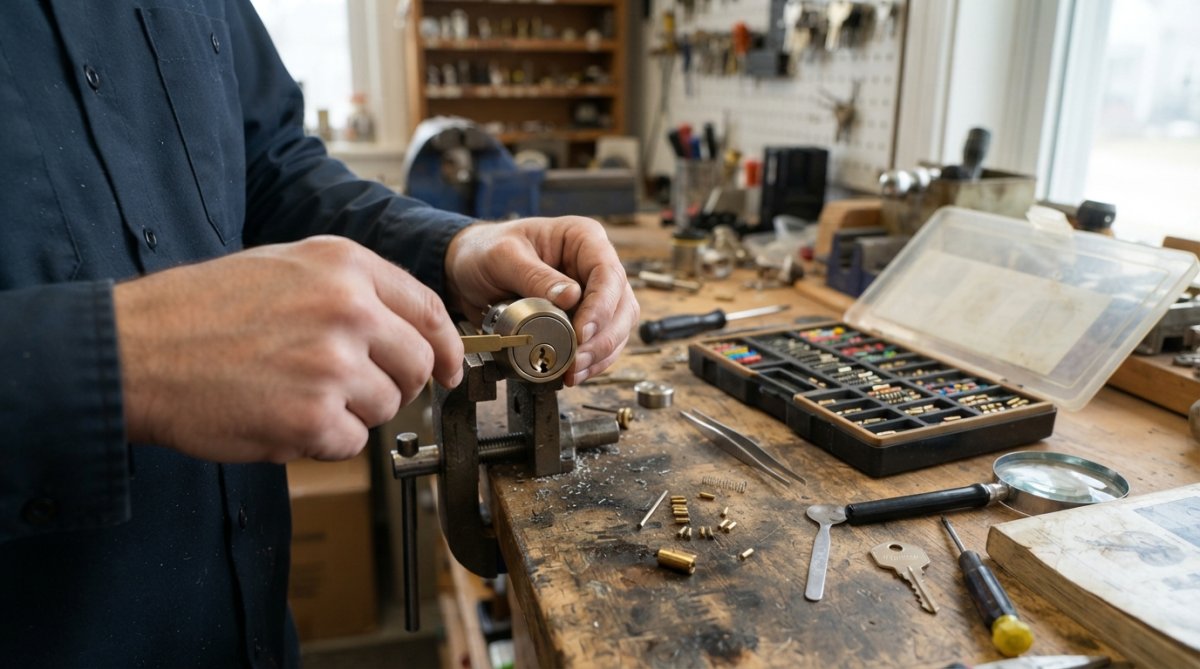
Rekeying a standard residential deadbolt takes about 20 to 30 minutes with the right kit. Work over a towel or shallow tray so small parts do not roll away, and confirm which cylinder you have first, the two most common apartment brands use different pin sizes and disassembly methods.
Step 1: Identify Your Lock Brand and Keyway
Unscrew the deadbolt and separate the cylinder from the housing. Look for the brand stamp on the cylinder face or latch plate. The three most common in apartments are:
- Kwikset, uses a 5-pin cylinder with a “KW1” keyway. Pin kits are labeled by color (for example, a #1 pin is a specific color in the Kwikset chart). Kwikset cylinders often use a retaining clip that you pry off with a small flathead screwdriver.
- Schlage, uses a 5-pin cylinder with a “SC1” keyway. Schlage pins are numbered and sized differently from Kwikset, so a Kwikset pin kit will not work. Schlage cylinders typically use a C-clip on the back of the plug.
- Defiant / off-brand builder-grade, common in newer apartment complexes. These often use a Kwikset-compatible keyway but with looser tolerances, so pins may need slight adjustment.
Step 2: Remove the Plug Without Losing Springs
Insert the follower tool into the cylinder from the back as you slide the plug out the front; it holds the driver pins and springs inside the bible. Pull the plug without a follower and the springs launch, never to be found.
Step 3: Match New Pins to Your New Key
This is the step most guides skip:
- Lay your new key on the pinning chart that came with your kit, which shows key cut depths numbered 0 through 9 (Kwikset and Schlage use different spacing).
- Read the cut depth at each of the five positions on the key.
- Select the key pin matching each depth number, a #3 cut takes a #3 pin.
- Drop the new key pins into the plug in order, from position 1 (closest to the keyway opening) to position 5.
Many people rekey to a key they already have, a spare from a previous apartment or one cut at a hardware store. If rekeying to a brand-new key, have it cut first so you can read the cuts.
Do not mix pin sizes between brands. A Kwikset #3 pin and a Schlage #3 pin are different lengths. Using the wrong brand’s pins will produce a lock that either will not turn or turns with the wrong key.
Step 4: Reassemble and Test Before Mounting
Slide the plug back into the housing, pushing the follower out the back, and reinstall the retaining clip. Insert the new key and turn; the plug should rotate smoothly. If it binds, pull the plug and recheck the pin order, one pin in the wrong position causes the bind.
Brand-Specific Notes
- Kwikset SmartKey, this is a different system. You do not remove pins. You insert the current key, insert a SmartKey rekey tool, turn, remove the old key, insert the new key, and turn back. It takes about 30 seconds and requires no pin kit. If your apartment has SmartKey, do not buy a pin kit.
- Schlage SecureKey, similar concept to SmartKey but uses a different tool. Check the cylinder face for the word “SecureKey” before you buy anything.
- Commercial-grade cylinders (often found in larger apartment buildings) may use a 6-pin or 7-pin system and a restricted keyway. These are not good DIY candidates.
If any step feels wrong, stop. A misaligned pin stack can jam the lock and lock you out of your own apartment.
Locksmith Rekeying Cost vs. Doing It Yourself
A locksmith rekeying cost depends on the number of cylinders, lock type, appointment timing, and your local market. Ask for a quote before you book; here is the framework most locksmiths use so you can sanity-check it.
What Drives the Price
- Number of cylinders. Most locksmiths charge a base service call plus a per-cylinder fee. One deadbolt is cheapest; a deadbolt plus a knob or lever lock roughly doubles the cylinder count.
- Lock type. Standard residential cylinders (Kwikset, Schlage) are fastest. Smart locks, high-security cylinders, and commercial-grade hardware take longer and often need brand-specific tools.
- Time of day. Business-hours appointments are lowest; evening, weekend, and holiday calls carry a surcharge. Emergency lockout calls are priced differently and usually cost the most.
- Travel. Some locksmiths include a service radius in the base fee; others charge per mile beyond it.
- Key duplication. Extra keys cut on-site are usually a small per-key charge.
DIY vs. Professional: The Real Trade-Off
DIY saves the labor charge but costs a kit and an afternoon. A basic rekeying kit with pins, a follower, and a pinning chart is a one-time purchase covering multiple future rekeys, with one standard deadbolt and a common brand, it pays for itself on the first job.
| Factor | DIY Rekey | Professional Rekey |
|---|---|---|
| Time per lock | 20-30 minutes | Under 15 minutes |
| Upfront cost | One-time kit purchase | Per-service fee |
| Tools needed | Rekeying kit, follower | Full locksmith kit |
| Best for | One standard deadbolt | Multiple units, master key systems, smart locks |
| Risk | Springs lost, pin stack errors | Low |
| Landlord approval | Still required | Still required |
| Repeat cost | Near zero after kit purchase | Charged every visit |
When DIY Actually Costs More
DIY stops being the cheaper option when:
- You break a spring or bend a snap ring and have to buy replacement parts.
- You rekey incorrectly and the lock jams, forcing an emergency locksmith call anyway.
- You have a smart lock or a brand-specific cylinder that requires a proprietary tool.
- You are rekeying more than two or three cylinders, the time cost starts to exceed the labor charge.
Renters with a single standard deadbolt and a free afternoon. Skip DIY if you have a smart lock, a master key system, or more than two cylinders.
Getting a Fair Quote
When you call a locksmith, give the brand and model of your lock, the number of cylinders, and whether you need keys cut, a quote without those details is a guess. Ask whether the price includes the service call, per-cylinder fee, and any after-hours surcharge. For property managers handling tenant turnover, scheduling recurring service keeps every entry door on the same keyway and avoids lockout calls.
Common Rekeying Mistakes and How to Fix Them
The most common mistake is losing a spring during plug removal. The second is mixing up pin sizes when rebuilding the pin stack.
Watch for these:
- Springs launched during removal. Fix: always use a follower tool and work over a tray.
- Wrong pin sizes. Fix: match each pin to the pinning chart before inserting.
- Snap ring bent on reinstall. Fix: use a proper snap ring tool, not pliers.
- Plug will not turn after reassembly. Fix: pull the plug and recheck the pin stack order.
- Lock jams after a week. Fix: the cylinder may be worn. Replace the hardware.
A Security Checklist for Rekeyed Apartment Locks
Run this checklist after any rekey to confirm the lock works.
- New key turns smoothly with no grinding
- Old key no longer works in any cylinder
- Deadbolt extends fully into the strike plate
- Strike plate screws are at least 3 inches long
- No spare keys left with neighbors or prior occupants
- Key duplication limited to people you trust
- Landlord has a copy if the lease requires it
- Entry door and any privacy lock on the same keyway if desired
Frequently Asked Questions
Can I rekey my apartment locks myself?
Yes, if your lease allows it. Rekeying an apartment lock requires a rekeying kit, a follower tool, and replacement key pins. You remove the cylinder, swap the pins to match a new key, and reassemble. The job takes 20-40 minutes per lock. Check your lease first, because many landlords require written permission or a licensed locksmith for any lock work.
Do I need landlord permission to rekey my apartment?
In most cases, yes. Landlord tenant law lock changes usually require written consent because the landlord needs a working key for emergency entry. Some states also require landlords to change locks between tenants. Send a written request describing the work and asking for approval. Keep a copy. If your landlord refuses, you may still have the right to request a lock change for safety reasons under local rules.
How much does a professional locksmith charge to rekey a lock?
Locksmith rekeying cost depends on the number of locks, lock type, and after-hours timing. A single lock typically costs less than a full replacement, and bundling multiple locks lowers the per-lock price. For a firm quote on your apartment, contact Natick Finest Locksmith directly. DIY rekeying saves labor but requires buying your own DIY lock rekeying tools.
What locks cannot be rekeyed?
Most standard pin tumbler deadbolts and knob locks can be rekeyed. Locks that cannot be rekeyed include certain smart locks with sealed electronic cylinders, some high-security locks with restricted keyways, and damaged locks with worn pins or a cracked plug. If the cylinder is corroded or the keyway is proprietary, replacement is usually the better option.