
Table of Contents
- How Emergency Lockout Response Works
- Average Locksmith Response Time: What to Expect
- Factors Affecting Locksmith Arrival Times
- Finding an Emergency Car Lockout Service Near Me: What to Check
- What to Do While You Wait for a Locksmith
- The Cost-to-Speed Relationship in Emergency Locksmithing
- Frequently Asked Questions
Last Updated: October 2, 2026
How Emergency Lockout Response Works
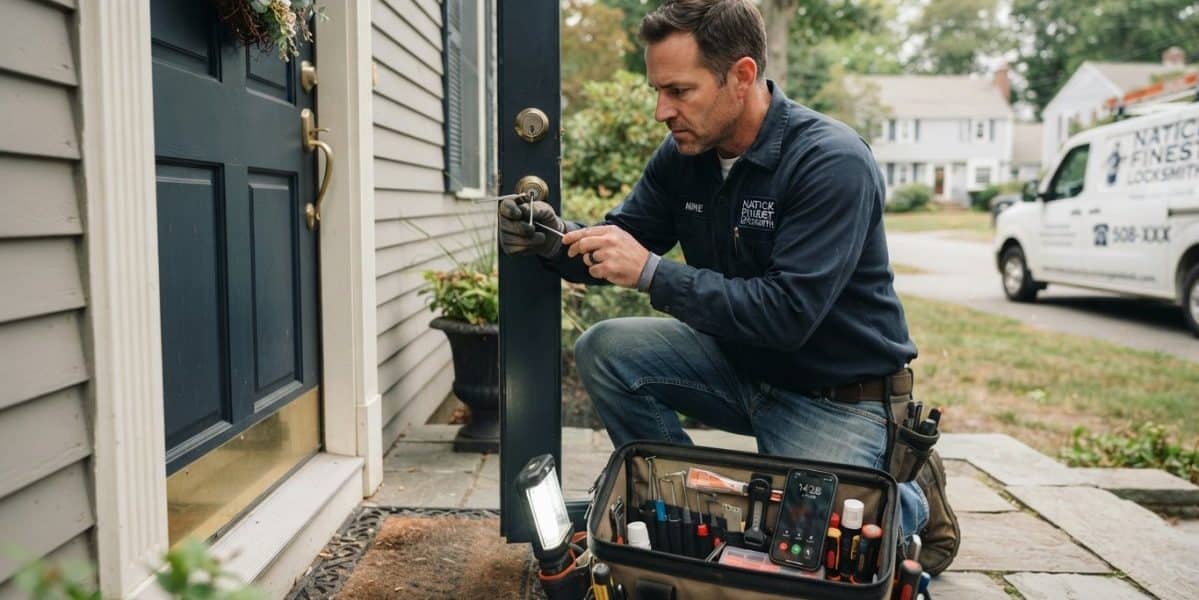
Emergency lockout response time expectations start with understanding what happens the moment you hang up the phone. When you call a locksmith for a lockout, the clock begins ticking on a process that involves dispatching a mobile unit, routing a technician through traffic, and arriving prepared to open your door without damage. At Natick Finest Locksmith, we treat every lockout call as time-critical.
The process is straightforward, but the variables that determine how fast a technician reaches you are not.
The Dispatch Process: From Call to Arrival
A typical emergency dispatch follows six steps:
- You call and describe the lockout (residential, commercial, or automotive)
- The dispatcher confirms your location and lock type
- The nearest available technician receives the job assignment
- The technician loads the appropriate tools and drives to your address
- You receive an estimated time of arrival, or ETA
- The technician performs an on-site assessment and opens the lock
What most people don’t realize is that step three makes or breaks your wait time. If the closest on-call technician is already on another service call, the next available mobile unit may be coming from farther away. That geographic radius, not the locksmith’s willingness to help, is usually the real driver of your wait.
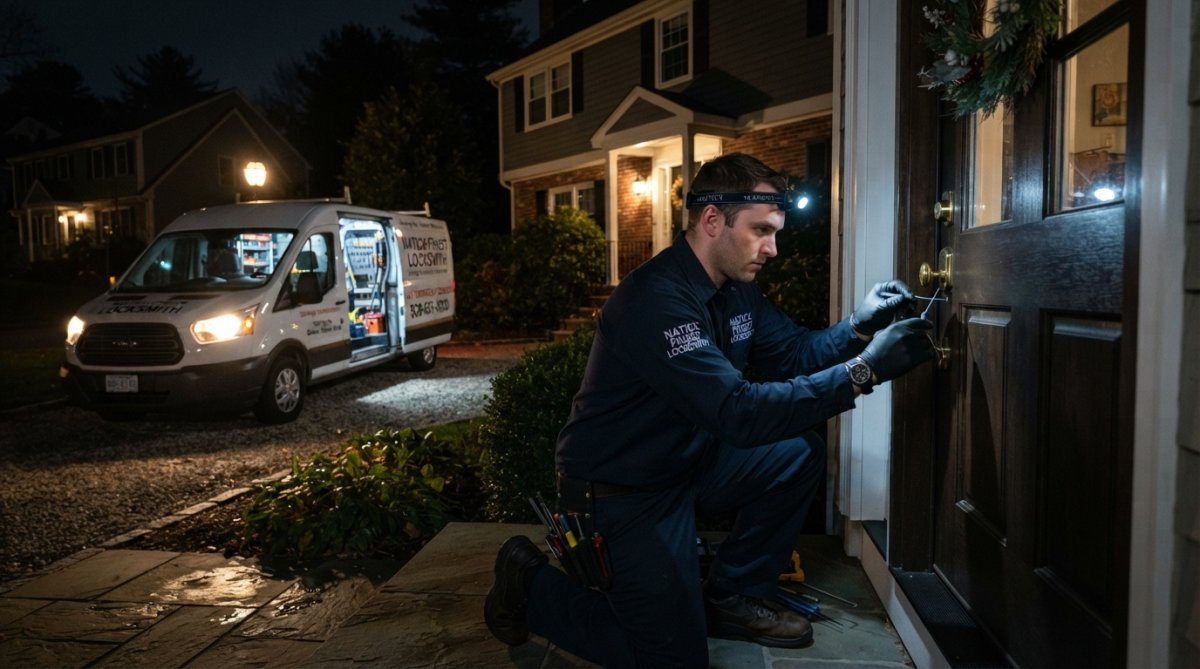
When you call, have your exact address ready before the dispatcher asks. Giving a cross-street or landmark instead of a street number adds minutes to the dispatch process while the technician searches for you.
Average Locksmith Response Time: What to Expect
A realistic arrival window for emergency lockout service is 15 to 45 minutes in dense suburban and urban areas, and longer in rural locations. That range reflects two very different service windows that customers often confuse with each other.
Emergency vs. Scheduled Service Windows
Emergency calls are prioritized. When you’re locked out, the dispatcher routes the nearest available technician immediately, and that technician typically arrives within the shorter end of the range. Scheduled service, by contrast, is booked into a time block that fits both your calendar and the technician’s route. A rekeying appointment or a lock upgrade can reasonably wait a day or two, and that scheduling flexibility is why non-urgent jobs often land in a wider arrival window.
The takeaway: don’t judge a locksmith’s emergency response by how long a scheduled appointment takes to book. The two operate on separate dispatch tracks.
Factors Affecting Locksmith Arrival Times
Several variables push your wait time up or down, and understanding the mechanism behind each one helps you set realistic expectations before you call. The table below is a starting point; the paragraphs that follow explain why each factor moves the needle.
Urban Density vs. Rural Distance
In densely populated areas, more technicians operate within a smaller geographic radius, so the nearest available mobile unit is usually close by. In rural areas, the opposite is true: a single technician may cover a wide territory, and the drive itself can take longer than the actual lock work. A useful rule of thumb is that every additional 10 miles of service radius adds roughly 15 to 20 minutes of drive time under normal conditions. Urban density shortens response latency; distance extends it.
Traffic, Weather, and Time of Day
Traffic congestion during rush hour can double a drive that would otherwise take ten minutes. Winter weather slows every vehicle on the road, and off-hours calls late at night may mean fewer technicians are on call. Time of day matters too: a lockout at 2 p.m. on a Tuesday and a lockout at 2 a.m. on a Sunday are not the same job, even if the address is identical.
A common pattern is a “dispatch cascade”: when one technician is tied up on a lengthy job, the next nearest unit absorbs the overflow, and that unit’s original ETA slips. This is why a quoted window can stretch even when nothing about your address changed.
| Factor | Effect on Wait Time | What You Can Do |
|---|---|---|
| Urban density | Shortens arrival window | Provide exact address |
| Rural distance | Extends arrival window | Call the nearest provider |
| Traffic congestion | Adds unpredictable delay | Call before rush hour if possible |
| Severe weather | Slows all mobile units | Confirm ETA when dispatched |
| Off-hours timing | Fewer technicians on call | Ask about current availability |
| Dispatch cascade | Shifts ETA mid-route | Request a callback if late |
Seasonal and Holiday Patterns
Response windows tend to widen during peak demand periods: the first cold snap of winter, the week between Christmas and New Year’s, and the start of a new school year all generate clusters of lockout calls. During these windows, even well-staffed providers may quote the longer end of their normal range. If your lockout falls on a major holiday, ask the dispatcher whether the on-call rotation is fully staffed before you commit.
Liability and Insurance During the Wait
This is the factor most guides skip. If you are locked out in a dangerous location, in extreme weather, or with a child or pet inside a vehicle, the wait itself carries risk that a faster ETA cannot eliminate.
Don’t assume a quoted arrival window is guaranteed. Traffic and weather can shift an ETA mid-route. Ask the dispatcher for a callback if the technician is running late, and confirm the price before work begins.
Finding an Emergency Car Lockout Service Near Me: What to Check
Searching for an emergency car lockout service near me returns plenty of listings, but not all of them are legitimate. Before you commit, verify three things: that the business has a real local address, that the technician will quote a price before starting, and that the company can confirm its credentials on request. Natick Finest Locksmith holds Yankee Security Certificates and operates as a registered LLC.
Verification matters because the locksmith industry has a well-documented problem with out-of-area call centers that subcontract work to whoever answers.
What to Do While You Wait for a Locksmith
Use the wait productively instead of standing idle. The steps below cover safety, verification, and temporary security, three areas most lockout guides gloss over.
Stay Safe and Stay Visible
First, stay in a safe, well-lit spot, especially at night. If you’re locked out of a vehicle, remain near the car but off the roadway, and turn on your hazard lights if you’re on a shoulder. If you’re locked out of a home or business, wait in a public area or a neighbor’s porch rather than in an unlit alley or stairwell.
Verify the Technician Before You Let Them Work
This is the step most people skip, and it’s the one that prevents scams. Before you allow anyone to touch your lock, confirm three things:
- The company name matches the one you called.
- The technician can produce a business card, a company-issued ID, or a uniform with the business name.
- The quoted price is confirmed in writing or on a mobile receipt before work begins.
Take Safe, Temporary Security Measures
If you’re worried about security while you wait, a few non-destructive measures can reduce risk without damaging the lock:
- Ask a neighbor to keep watch or sit with you.
- Secure a sliding door with a cut dowel or a commercially available charley bar.
- Move valuables out of sight if you’re waiting outside a vehicle.
- Keep your phone charged and share your location with a trusted contact.
The safest thing you can do during a lockout wait is nothing to the lock itself. Every minute you spend prying at it is a minute that could turn a quick open into a costly repair.
The Cost-to-Speed Relationship in Emergency Locksmithing
Faster response usually costs more, but not for the reason most people assume. The premium isn’t just for speed; it covers the overhead of keeping technicians on call around the clock, maintaining a fleet of equipped mobile units, and dispatching the nearest available professional rather than the cheapest one. Off-hours calls, weekend service, and long-distance drives all add to the cost-to-speed correlation.
Frequently Asked Questions
What is considered a reasonable emergency lockout response time?
Most locksmiths aim for a 15 to 45 minute arrival window in urban and suburban areas. In dense metro areas like Greater Boston, 20 to 30 minutes is a common benchmark. Rural locations may stretch to 60 minutes or more due to distance. A reasonable expectation depends on your location, traffic, and time of day. When you call, ask for a specific arrival window so you know exactly when the technician will reach you.
What factors affect how fast a locksmith can reach me?
Several factors affect locksmith arrival: your distance from the nearest available technician, traffic congestion, weather conditions, time of day, and whether the call is for a residential, commercial, or automotive lockout. Urban density usually means faster service because more mobile units are on the road. Off-hours calls may take longer if fewer technicians are on call. Always share your exact location and lock type when you call to get the most accurate ETA.
Does time of day affect emergency lockout response times?
Yes. Rush hour traffic in the Greater Boston area can add 10 to 20 minutes to a locksmith’s arrival. Late-night and early-morning calls may see faster road conditions but fewer technicians available, which can offset the traffic advantage. Weekends and holidays vary by provider. If you lock yourself out during peak hours, call immediately and ask for a realistic arrival window rather than assuming a standard 15-minute response.
How can I verify a locksmith is legitimate before they arrive?
Ask for the technician’s name and license or certification number when you call. A legitimate locksmith will provide a company name, a local phone number, and a clear service call fee before dispatch. Check for a physical business address and online reviews. Avoid providers who quote unusually low prices or refuse to give an arrival window.
A lockout is stressful enough without wondering whether help will actually show up. Natick Finest Locksmith provides immediate response and fast arrival times across the Greater Boston area, with experienced technicians available every day of the week at any time. We offer same-day service with all necessary tools on hand, cost-effective solutions that meet code standards, and reasonable pricing you can confirm before work begins. Call Now to get back inside without the guesswork.