
Table of Contents
- Why Lock Mechanism Issues Keep Coming Back
- How to Fix a Sticking Door Lock in Six Steps
- The Best Lubricant for Door Locks (and What to Avoid)
- Door Lock Maintenance Tips That Actually Prevent Recurring Lock Issues
- When to Replace a Door Lock Instead of Repairing It
- DIY or Call a Locksmith? Decision Criteria and Verification
- Frequently Asked Questions
Last Updated: October 7, 2026
Why Lock Mechanism Issues Keep Coming Back
Most people fix a sticking lock and assume the problem is gone. Then it jams again three weeks later. That cycle is the real problem, and preventing recurring lock mechanism issues starts with understanding why the first fix failed. A lock is a small mechanical system: springs, pins, a cylinder, and a latch that all have to move freely together.
Symptoms That Point to a Repeat Problem
Recurring trouble rarely appears out of nowhere. It usually shows up as one of these signs:
- The key sticks on the way in or feels gritty when you turn it
- You have to jiggle the key or lift the door to get the latch to release
- The lock works in dry weather but fights you after rain or cold snaps
If any of these sound familiar, the lock is telling you the cause was never fixed. A sticking lock that keeps returning is almost always a symptom of debris, worn parts, or a door that has shifted in its frame.
Common Causes of a Sticking or Stiff Lock
A stiff lock has a short list of usual suspects. The most common is debris inside the keyway and lock mechanism. Dust, grit, and metal shavings mix with old lubricant and form a paste that slows every moving part. The second cause is misalignment: when a door sags or the frame shifts, the latch no longer lines up with the strike plate, so you are forcing the bolt instead of guiding it.
How to Fix a Sticking Door Lock in Six Steps
Here is the process we use to fix a sticking door lock and keep it working:
- Inspect first. Look at the latch, strike plate, and door gap before touching anything. Note where the latch rubs the plate.
- Clean the keyway. Spray compressed air into the keyhole to blow out loose dust and grit.
- Brush the lock face. Use a soft brush to clear debris from the cylinder face and around the latch.
- Apply the right lubricant. Use a dry lubricant made for locks (see the next section). A little goes a long way.
- Work the key. Insert and turn the key several times to spread the lubricant through the mechanism.
- Check alignment. Tighten hinge screws and adjust the strike plate if the latch is catching.
Test the door after each step. If the key still drags, the problem is deeper than surface dirt.
When a Cleaning Job Is Not Enough
Cleaning and lubrication solve most minor stiffness. They will not fix a bent latch, a cracked cylinder, or a door frame that has moved. If the lock binds even when the door is open, the issue is inside the lock mechanism, not the alignment. If the key turns but the latch will not retract, a worn component has likely failed.
The Best Lubricant for Door Locks (and What to Avoid)
There is no single “best” lubricant for every lock. The right choice depends on the lock type, where it lives, and what the manufacturer specifies. What almost every lock has in common is that a dry product beats a wet one, because dry lubricants leave no sticky film for dust and grit to cling to. Oil-based products feel smooth for a week and then turn into the exact gummy paste that causes recurring lock mechanism issues.
Match the Lubricant to the Lock
| Lubricant | Best For | Watch Out For |
|---|---|---|
| Graphite powder | Older pin-tumbler cylinders, interior doors, low-humidity homes | Messy black residue; can clump in damp coastal air; not ideal for exposed exterior locks |
| Dry PTFE (polytetrafluoroethylene) spray | High-use residential cylinders, knob and lever locks, most modern deadbolts | Carrier solvent needs a minute to flash off; over-application still leaves residue |
| Silicone-based dry spray | Exterior locks exposed to rain, salt air, freeze-thaw cycles | Some silicone carriers can stain finished hardware if sprayed carelessly |
| Manufacturer-supplied lubricant | Smart locks, multipoint systems, high-security cylinders | Often the only product that will not void a warranty |
A few practical rules of thumb:
- Pin-tumbler cylinders (the standard keyed lock on most homes): graphite or dry PTFE both work. Graphite is the traditional choice; dry PTFE is cleaner and holds up better in humid climates.
- Exterior locks facing weather: silicone-based dry spray. It resists moisture and does not wash out as quickly as graphite.
- Smart locks and electronic deadbolts: follow the manufacturer’s guidance first. Many specify a particular dry lubricant and warn against graphite, which can interfere with sensors and motorized internals.
When Manufacturer Guidance Wins
If the lock came with instructions, a warranty card, or a spec sheet, that guidance overrides general best practices. A warranty claim on a smart lock or a high-security cylinder can be denied if the wrong lubricant was used.
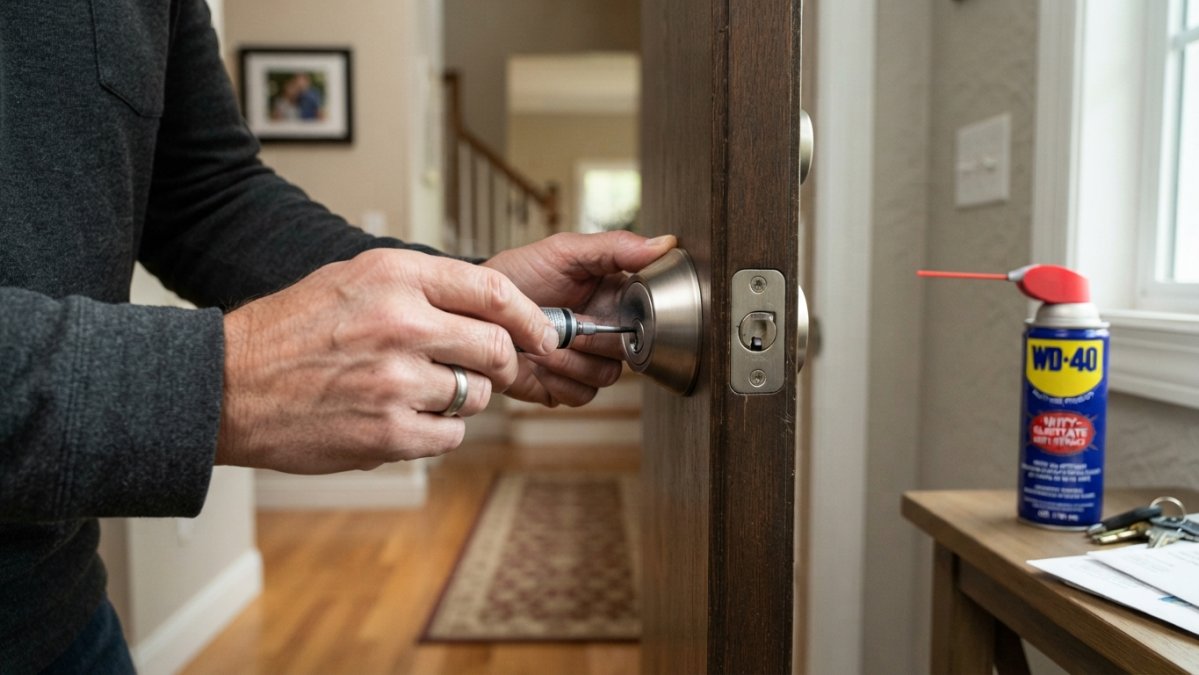
Never use cooking oil, motor oil, WD-40 as a long-term lubricant, or general-purpose penetrating spray in a lock. They attract debris and gum up the mechanism, which is exactly the problem you are trying to solve. A locksmith often has to clean out the mess before the real repair can start.
How Much to Apply
Less is more. One short puff of graphite, or a one-second burst of dry spray, is enough for a typical residential cylinder. Work the key in and out and turn it several times to distribute the product. If the key feels gritty afterward, you used too much, blow out the excess with compressed air and try again with half the amount.
Door Lock Maintenance Tips That Actually Prevent Recurring Lock Issues
Prevention beats repair every time, but “maintenance” means different things depending on why the lock keeps failing. Treating every recurrence as a dirt problem is why so many locks get cleaned and lubricated on a schedule and still jam. The tips below are organized by root cause so you can match the fix to the actual failure.
Diagnose the Root Cause Before You Maintain
Recurring lock problems fall into five buckets. Each one needs a different maintenance response:
- Contamination (dust, grit, old lubricant paste): The key feels gritty, the cylinder drags, and cleaning plus dry lubricant fixes it, temporarily. If it returns within weeks, contamination is a symptom, not the cause.
- Worn key or cylinder: The key looks shiny, rounded, or has visible wear on the cuts. A worn key wears the pins, and worn pins wear the key. Replacement of one or both is the only durable fix.
- Door sag: The top hinge pulls loose, the door drops, and the latch starts rubbing the strike plate. Tightening screws helps briefly; longer screws into the framing or hinge replacement is the real fix.
If you cannot tell which bucket you are in, the maintenance you do will keep treating symptoms.
A Repeatable Inspection and Cleaning Cadence
Use this as a baseline, then adjust for your environment using the modifiers below.
| Task | Baseline Frequency | Why It Matters |
|---|---|---|
| Wipe the lock face and keyway | Monthly | Removes surface dust before it packs into the cylinder |
| Blow out the keyway with compressed air | Every 3 months | Clears grit and old lubricant residue |
| Apply dry lubricant (matched to lock type) | Every 6 months | Reduces friction without gumming |
| Tighten hinge and strike-plate screws | Every 6 months | Prevents sag and misalignment before they start |
| Full inspection of all entry locks, key feel, latch engagement, door gap, plate alignment | Seasonally | Catches wear, sag, and misalignment before failure |
| Replace worn keys | As soon as cuts look rounded or shiny | A worn key accelerates cylinder wear |
Adjust the Schedule for Your Environment
- High-use entry doors (main front door, office entry): Double the cleaning frequency. Wipe the face monthly, blow out the keyway every 6-8 weeks, and inspect seasonally.
- Exterior locks exposed to weather: Inspect after every major storm or freeze-thaw cycle. Salt air and road salt accelerate corrosion; wipe the lock face and apply silicone-based dry spray more often than the baseline.
- Dusty environments (near construction, unpaved roads, workshops): Blow out the keyway monthly instead of quarterly. Contamination is the dominant failure mode here.
What to Check at Every Inspection
A two-minute inspection catches most recurring problems before they strand you:
- Insert the key and turn it. It should move smoothly with light resistance, no grit, no grinding, no need to jiggle.
- Watch the latch as you turn the key. It should retract fully and snap back without hesitation.
- Close the door without touching the handle. The latch should slide into the strike plate on its own. If you have to push, pull, or lift the door, alignment is off.
- Look at the door gap around the frame. An uneven gap points to hinge sag.
- Check the hinge and strike-plate screws. Any that turn easily need tightening; any that spin freely need longer screws or a repair.
Do the seasonal inspection when you change your clocks for daylight saving. It is an easy reminder, and it catches alignment and wear problems before they turn into a lockout.
When Maintenance Alone Will Not Stop the Recurrence
If you are cleaning, lubricating, and aligning on schedule and the same lock still fails, the problem is mechanical wear or a damaged component, not maintenance. At that point, continued cleaning is wasted effort. A worn cylinder, a cracked housing, or a failed spring will keep failing no matter how diligent the upkeep. The honest answer is repair or replacement, and the sooner you make that call, the less likely you are to be locked out at the worst possible moment.
When to Replace a Door Lock Instead of Repairing It
Replace the lock when the cylinder is cracked, the key turns freely without moving the latch, or the same lock has failed repeatedly after proper cleaning. Repair makes sense for dirt, mild stiffness, and alignment. Replacement is the better call when parts are worn or the lock is old and no longer reliable. A worn lock also weakens your security, since a failing mechanism is easier to defeat.
DIY or Call a Locksmith? Decision Criteria and Verification
Handle it yourself if the lock is simply dirty, dry, or slightly misaligned. Those are cleaning and adjustment jobs. Call a locksmith if the key breaks off inside, the cylinder is damaged, the lock will not turn at all, or the same problem keeps returning after you have cleaned and lubricated it. For commercial locks and multi-unit buildings, professional service is usually the safer choice.
The real fix for preventing recurring lock mechanism issues is not more lubricant. It is finding the root cause, cleaning the mechanism properly, using a dry lubricant, and keeping the door aligned.
Frequently Asked Questions
Why does my door lock keep sticking?
Recurring sticking usually comes from three sources: debris and dust packed into the keyway, worn or dry internal components, or a door that has shifted out of alignment with the strike plate. If you clean and lubricate the lock and it still sticks within a few weeks, the door alignment or the lock mechanism itself is the real problem, not the lubricant.
How can I prevent a door lock from sticking again?
Build a routine. Clean the keyway with compressed air or a soft brush, apply a dry or silicone-based lubricant made for locks, and check that the latch lines up with the strike plate. Do this monthly for exterior doors and after any season change. A repeatable schedule is what separates a one-time fix from preventing recurring lock mechanism issues.
What lubricant should I use on a door lock?
Use a dry lubricant such as graphite powder or a silicone-based spray designed for lock hardware. Avoid oil-based lubricants, which attract dust and debris and eventually gum up the lock mechanism. If you are unsure which product fits your lock type, ask a locksmith before applying anything, since the wrong product can make a stiff lock worse.
When should I replace a door lock instead of repairing it?
Replace the lock when the key cylinder is worn enough that keys no longer turn smoothly after cleaning, when the deadbolt or latch shows visible damage, or when the same lock has failed multiple times in a year. If you are renting, check your lease before changing hardware, and have a licensed locksmith confirm the replacement meets local code.
A lock that keeps failing is a sign the cause was never addressed, and that is a security risk you do not want to ignore. Natick Finest Locksmith offers same-day service, experienced technicians, and 24/7 availability for both emergency and scheduled appointments, with code-compliant solutions and reasonable pricing. We handle everything from cleaning and repair to full lock replacement and rekeying. Call now to schedule service and keep your locks working the way they should.