
Quick Summary
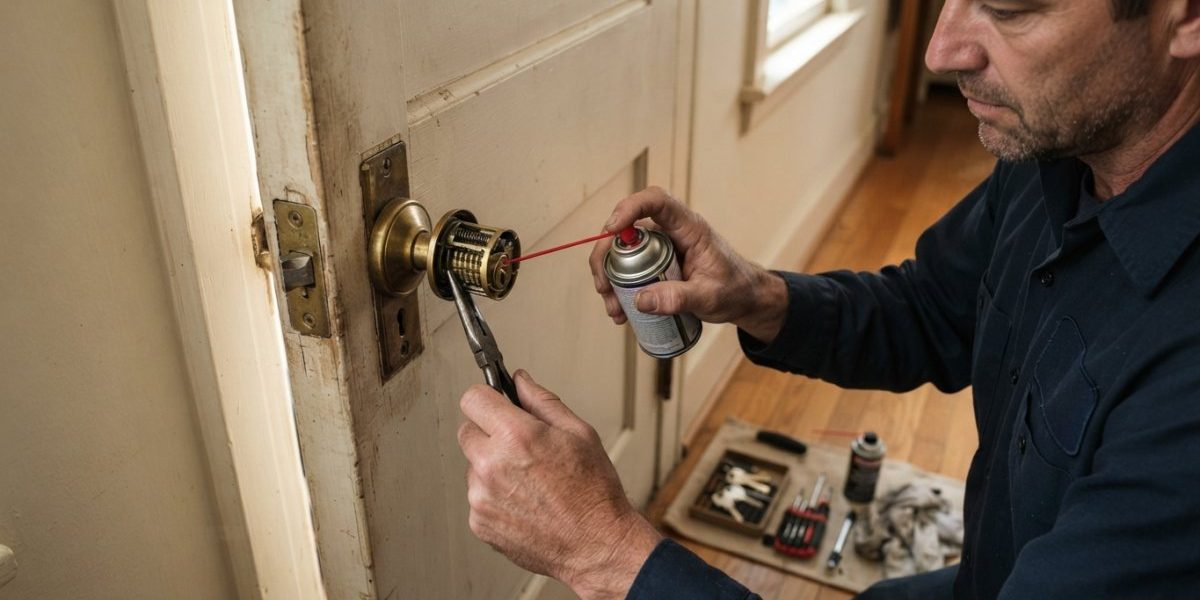
A sticky door lock usually does not need force. First check whether the lock or the door is causing the problem, then clean the keyway with compressed air and apply a small amount of dry lubricant suited to the lock type. If the lock works with the door open but binds when closed, the door alignment is the likely cause, and hinge fixes come before touching the strike plate.
- Test the lock with the door open; if it works then but binds when closed, suspect door alignment.
- Blow out the keyway with short bursts of compressed air instead of scraping it with a pin or screwdriver.
- Use a dry PTFE or silicone spray labeled for locks, applied in one short burst.
- Avoid heavy oils, grease, and cooking spray, which attract dust and turn gummy inside the cylinder.
- Tighten loose hinge screws, and never enlarge screw holes, chisel the frame, or bend hinges with a hammer.
Table of Contents
- Diagnose the Problem Before You Touch the Lock
- Common Causes of a Sticky Door Lock
- Clean Dirt and Debris from the Keyway Safely
- Choosing the Best Lubricant for a Sticky Door Lock
- Working the Key and Testing the Lock Without Forcing It
- How to Stop a Door From Sticking to the Frame
- When to Stop and Call a Locksmith
- Frequently Asked Questions
Diagnose the Problem Before You Touch the Lock
Last Updated: November 7, 2026
A sticky door lock is frustrating, but it rarely needs force. Before you reach for any spray or tool, figure out what is actually causing the problem.
Start by watching how the door behaves. Does the key turn but the bolt doesn’t move? Does the door rub against the frame on the way in? Does the latch catch only when you push hard?
Is the Lock or the Door Causing the Sticking?
- If the key is hard to turn: the problem is usually inside the lock cylinder, the keyway, or the key itself.
- If the key turns but the bolt won’t extend or retract: the strike plate may be out of line, or the latch is binding.
- If the door rubs or drags at the top or bottom corner: the door has likely sagged on its hinges. The lock is just reacting to that.
A simple test helps. Close the door and turn the key slowly. Then open the door and try again. If the lock works fine with the door open, but gets stiff when closed, the door alignment is the likely cause.
Note: Frame-safe troubleshooting means never forcing the key, never prying the strike plate, and never enlarging screw holes to “fix” alignment. Those shortcuts are the most common way a simple sticking problem turns into a damaged frame.
Common Causes of a Sticky Door Lock
Most sticky locks come down to a handful of causes. Knowing them helps you pick the right fix the first time.
- Dirt and dust buildup: Grit collects in the keyway and around the pins over time, especially on exterior doors.
- Dry or old lubricant: When lubricant dries out or gets gummy, friction goes up.
- A worn or bent key: A key with worn cuts or a slight bend may not line up with the pins properly.
Common mistake: people often blame the lock when the real issue is the door. Check the door fit first.
Clean Dirt and Debris from the Keyway Safely
Cleaning is often the quickest fix. Work carefully so you don’t push debris deeper into the lock.

- Get the right tools. You’ll need a can of compressed air, a soft brush, and a clean cloth.
- Blow out the keyway. Hold the can upright and use short bursts. Aim into the keyway, not directly at the pins.
- Brush gently. Use the soft brush to loosen any grit along the edges of the keyway.
- Wipe the surface. Use the cloth to remove loose debris from the faceplate and the area around the cylinder.
- Test the key. Insert the key, turn it slowly a few times, and check whether it moves more smoothly.
Do not use a sharp object, such as a pin, paperclip, or screwdriver, to scrape the keyway. You can scratch or bend the pins. Keep your cleaning gentle.
Choosing the Best Lubricant for a Sticky Door Lock
Lubricant choice depends on the lock type, not just on whether the key is stiff. A product that helps a standard pin-tumbler cylinder can gum up a smart lock or leave residue in a high-security cylinder. Match the lubricant to the mechanism before you spray anything into the keyway.
Match the Lubricant to the Lock Type
- Standard residential pin-tumbler cylinder (deadbolt or knob lock): A dry PTFE or silicone spray labeled for locks is the safest default. Apply one short burst into the keyway, then work the key.
- High-security or restricted-keyway cylinders: Use only a dry PTFE spray. Graphite can clump in the tighter tolerances and bind the sidebar or slider mechanism. Check the manufacturer’s maintenance note before applying anything.
- Smart locks and electronic deadbolts: Avoid graphite and oil entirely. Most manufacturers specify a dry silicone or PTFE spray, and some prohibit field lubrication altogether. A sticky smart lock is often a battery, motor, or alignment issue, not a lubrication issue.
Products and Practices to Avoid
- Heavy oils, grease, and household cooking spray: They attract dust and lint, then turn gummy. Inside a cylinder, that gummy film can cause pins to stick in the down position and prevent the key from turning at all.
- WD-40 as a long-term lubricant: It is a solvent and water displacer, not a lasting lock lubricant. It can flush out grime in the short term, but it leaves little protective film and many users find the lock stiff again within weeks. If you use it to clean, follow with a dry lock lubricant.
- Graphite in oily or humid locks: Graphite and oil can combine into a paste. If the lock has previously been oiled, clean it before switching to graphite, or stay with a dry spray.
How Much to Apply
Less is more. One short burst or a light dusting is enough for a residential cylinder.
Watch out: spraying a large volume of lubricant into a cylinder can carry dirt into the pin chambers and make the binding worse. Apply in short bursts and test between applications.
The right lubricant depends on the lock type, so match the product to the mechanism before spraying.
| Lock type | Recommended lubricant | Avoid |
|---|---|---|
| Standard residential pin-tumbler | Dry PTFE or silicone spray labeled for locks | Heavy oils, grease, cooking spray |
| High-security or restricted keyway | Dry PTFE spray only | Graphite |
| Smart or electronic deadbolts | Dry silicone or PTFE, if manufacturer allows | Graphite, oil, field lubrication if prohibited |
| Multipoint or mortise locks | Light dry PTFE on cylinder, approved grease on linkage | Flooding the mechanism |
Working the Key and Testing the Lock Without Forcing It
After cleaning and lubricating, work the key in and out to spread the lubricant evenly.
Insert the key gently. Turn it slowly and smoothly. If you feel strong resistance, stop.
Signs the lock is working properly:
- The key slides in and out without catching.
- The bolt moves smoothly when you turn the key.
- The lock feels consistent from every turn, not just once in a while.
Watch out: if the key bends, sticks in the keyway, or you hear a grinding sound, stop right away.
Also check the key itself. Look for worn ridges, bends, or rough edges.
How to Stop a Door From Sticking to the Frame
When the lock works with the door open but binds when closed, the door fit is the cause. The goal is to correct the fit with reversible adjustments and without prying the strike plate, chiseling the frame, or enlarging screw holes. Work through these checks in order and stop as soon as the binding resolves.
Step 1: Test Alignment Without Altering the Frame
Open the door and turn the key or thumb turn. If the bolt moves freely with the door open, the lock mechanism is likely fine and the strike plate or door position is the issue.
A simple comparison test: mark the latch position on a piece of painter’s tape placed beside the strike plate, then open and close the door several times.
Step 2: Check the Hinges Before Touching the Strike Plate
Most door sag comes from the top hinge. Open the door and look for a gap between the hinge leaf and the jamb, or screws that have pulled loose.
If the top hinge is tight but the door still drags at the top corner, the hinge may be worn or the door may have warped. Do not bend the hinge with a hammer; that is a common cause of cracked jamb wood.
Step 3: Inspect the Strike Plate Without Moving It
Tighten the strike plate screws and check whether the plate sits flush against the jamb. A loose strike plate can shift under the latch and cause intermittent binding.
If the strike plate is visibly misaligned and the hinges are tight, a locksmith can often reposition the plate by filling the old screw holes and drilling new ones in the same plate footprint, which preserves the frame.
Step 4: Address Swelling and Weather Binding
Wood frames and doors swell in humid weather and shrink in dry air. If the binding appears only in summer or after heavy rain, the door or frame has absorbed moisture. Check the gap around the door with a flashlight; an uneven gap that closes at one corner points to swelling. Sealing the door edges and the frame with a paintable or clear sealant reduces moisture absorption.
Step 5: Retest and Know When to Stop
Open and close the door several times, then test the lock with the door closed. If the key still binds, stop adjusting and reassess. Repeated tightening, bending, or filing without a clear diagnosis is how frames get damaged.
Watch out: never enlarge screw holes, chisel the strike mortise, or bend hinges with a hammer to force alignment. Those changes are difficult to reverse and are the most common way a sticky lock turns into a damaged frame.
When to Stop and Call a Locksmith
Some sticking problems are beyond a simple home fix. Stop and call a professional if any of these apply:
- The key is stuck or broken inside the lock.
- The lock was working, then suddenly stopped completely.
- You have tried cleaning and lubricating, and the lock still binds.
Natick Finest Locksmith offers same-day service across the Greater Boston area, with the necessary tools on hand for locksmith work. For a lock that needs professional attention, you can book a residential locksmith service and get it sorted out promptly. If you are locked out right now, our lockout service handles urgent situations.
A lock that keeps sticking after repeated repairs may have internal wear that cleaning cannot fix, so it is worth getting a professional assessment.
For the broader question of keeping locks working over time, our guide on preventing recurring lock mechanism issues covers maintenance habits that reduce repeat problems. And if you are weighing a professional repair, why professional lock installation matters explains what a trained technician checks that a DIY fix can miss.
Sticky locks are usually fixable without drama. Start with diagnosis, clean gently, use the right lubricant, and check the door alignment before forcing anything. When the problem goes beyond what careful home maintenance can solve, call Natick Finest Locksmith for fast, reliable help.
Frequently Asked Questions
Will WD-40 fix a sticky lock?
WD-40 can loosen a lock temporarily, but it is a solvent that tends to attract dust and leave a sticky film inside the cylinder over time. For lasting results, use a dry lubricant such as graphite powder or a PTFE-based spray made for locks. If you have already sprayed WD-40 into the keyway, wipe out the excess with a clean cloth where you can reach it, then switch to a dry lubricant. Avoid spraying more solvent into the mechanism, since repeated use can make the sticking worse.
How do you fix a door lock when the key won’t turn?
Start by checking whether the key is bent, worn, or the wrong cut for the lock. Then confirm the door is not pressing against the latch or deadbolt, which can block the bolt even when the key turns freely. Clean the keyway with compressed air, apply a dry lubricant, and work the key in and out a few times. If the key still will not turn, stop forcing it. Forcing a key is the most common way keys break inside a lock, and that repair is harder than the original problem.
How can you tell whether a sticky lock is caused by door misalignment?
Close the door slowly and watch where the latch or deadbolt meets the strike plate. If the door rubs the frame at the top or bottom, or the bolt only slides in when you lift or push the door, the door has likely sagged or shifted on its hinges. Check the hinge screws for looseness and look for a gap that is uneven from top to bottom. A simple test is to open and close the door several times with the lock disengaged. If it binds only when latched, the alignment is the likely cause, not the lock cylinder.
When should you call a locksmith for a stuck door lock?
Call a locksmith if the key breaks inside the lock, if the lock is still stuck after cleaning and lubricating, or if you see signs of damage such as a bent bolt, cracked strike plate, or wood splitting around the frame. You should also call if you are locked out or the lock feels loose or grinds badly. A locksmith can usually diagnose the cause quickly and avoid the frame damage that often happens when a stuck lock is forced by an untrained hand.
