
Table of Contents
- Why Hiring Locksmiths for Multiple Rental Units Requires a Different Playbook
- What to Look for in a Locksmith for Landlords and Property Managers
- Rekeying Rental Units Between Tenants: A Turnover Workflow
- Master Key System for Rental Properties: Pros, Cons, and Key Control
- Locksmith Service Agreement for Property Managers: What to Include
- Multi-Unit Pricing and Cost Control for Hiring Locksmiths for Multiple Rental Units
- How to Evaluate and Manage a Locksmith Across Your Property Portfolio
- Frequently Asked Questions
Last Updated: October 18, 2026
Why Hiring Locksmiths for Multiple Rental Units Requires a Different Playbook
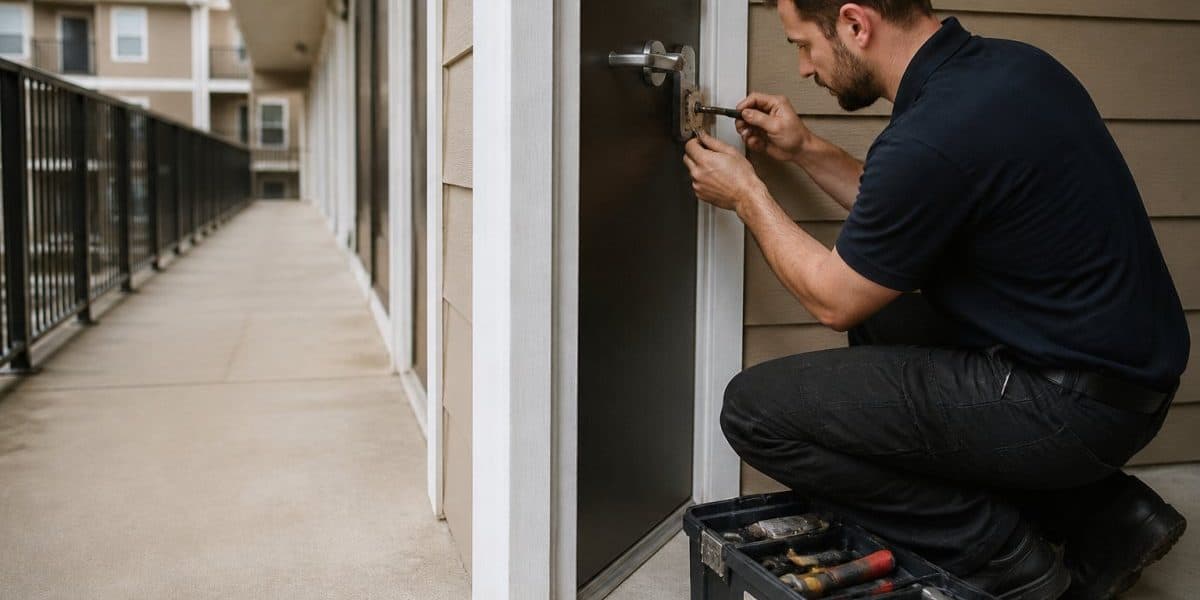
Hiring locksmiths for multiple rental units is the practice of contracting one vetted provider to handle rekeys, lock changes, lockouts, and master key systems across a portfolio of rental properties rather than calling a different shop for each job.
Below, we’ll show you exactly how to vet a provider, structure a turnover workflow, decide on a master key system, and keep costs under control across every unit you manage.
What to Look for in a Locksmith for Landlords and Property Managers
A locksmith for landlords and property managers needs three things a homeowner never asks about: verifiable credentials, documented response times, and the capacity to handle scheduled work at volume. The ranking pages for this keyword are mostly local service ads, so here is the neutral hiring checklist they skip.
Licensing, Insurance, and Background Checks
Start with paperwork. Ask for the company’s business registration, proof of general liability insurance, and confirmation that technicians undergo background screening. A locksmith who works inside occupied units and holds keys to a portfolio is a trust position, not a simple repair call. Verify the certificate of insurance lists the property management entity, not just the individual owner.
Request and keep on file:
- Business registration and, where your state requires it, the locksmith license number
- Certificate of insurance showing general liability limits and your entity as certificate holder
- Background-screening policy for technicians who will enter occupied units
Skipping the insurance check is a common mistake. If an uninsured technician damages a door frame or a tenant’s property during a rekey, the cost lands on you, not the locksmith.
Response Times and After-Hours Availability
Get response times in writing, in minutes, and tied to a service area. “Fast” means nothing in a contract. Ask specifically how the provider handles a 2 a.m. apartment lockout, whether after-hours response carries a different rate, and how many technicians cover your properties. A provider that cannot name a coverage window is telling you something.
A Vendor-Vetting Checklist You Can Score
Use the same five criteria for every provider and score each one so quotes are comparable:
- Credentials, license (if required in your state), insurance certificate, and screening policy on file before the first job.
- Service area and coverage, confirmed coverage for every property address, plus the number of technicians and vehicles assigned to your area.
- Response commitments, written standard and after-hours response windows, with the after-hours rate stated separately.
- Capacity for scheduled volume, can they absorb a batch of turnover rekeys in a single building visit, and how far out do they book?
- Documentation and references, sample work order, sample invoice, and two or three references from property managers with comparable unit counts.
Red flags: no certificate of insurance, vague response language, refusal to put rates in writing, no sample work order, or a single technician covering a wide territory. Any one of these is enough to keep looking.
Ask each finalist to quote the same scope, same unit count, same lock type, same schedule, so you compare like with like instead of comparing a single callout to a portfolio contract.
Rekeying Rental Units Between Tenants: A Turnover Workflow
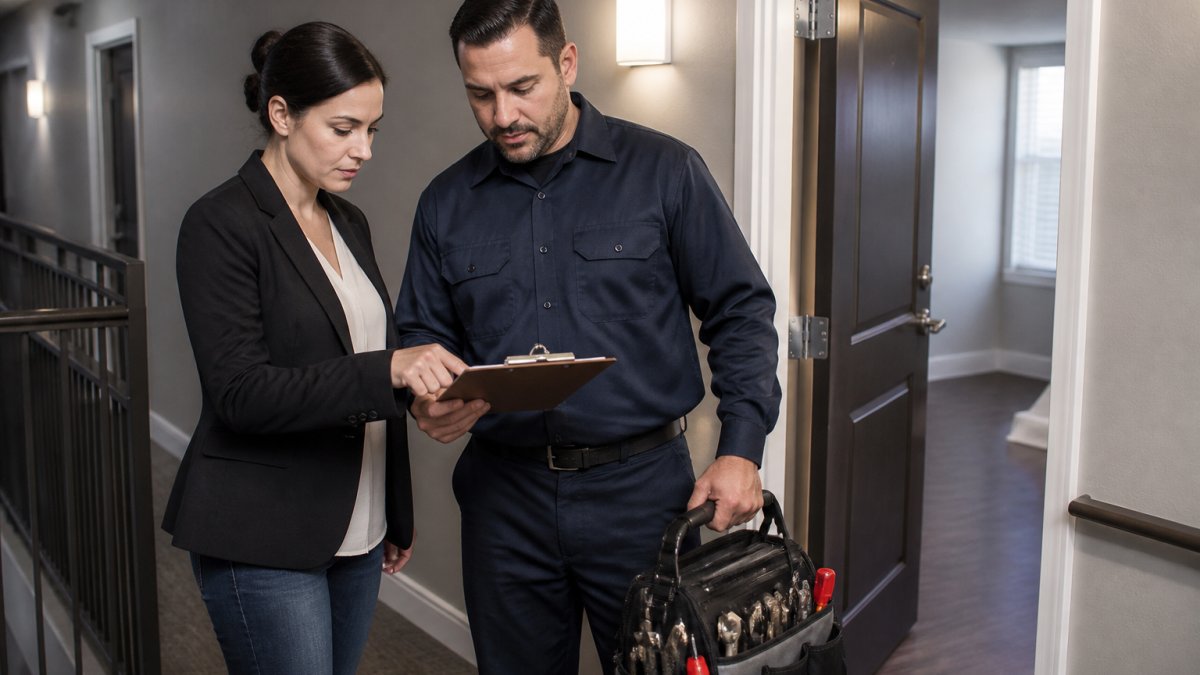
Rekeying rental units between tenants is the process of changing the internal pin configuration of an existing lock so old keys stop working and new keys are issued, and it should run as a scheduled workflow rather than a scramble on move-in day.
Scheduling Rekeys Around Move-Out and Move-In Dates
The gap between a move-out inspection and a move-in is your window, and it is usually short. Build a standing schedule with your provider so rekeys slot into that window automatically. A practical sequence:
- Confirm move-out date and complete the inspection
- Submit the rekey request with unit number and lock type
- Schedule the work for the day after the unit is vacated
- Verify completion and log the new key count
- Release keys only at lease signing
What to Do With Old Keys and Lock Hardware
Collect every key at move-out, including spares and any copies the tenant had made. Do not reuse old keys after a rekey, and do not hand a new tenant a key that was ever in circulation. Inspect the hardware while the technician is on site: a worn cylinder or a loose strike plate is cheaper to replace during a scheduled visit than during an emergency call.
Master Key System for Rental Properties: Pros, Cons, and Key Control
A master key system for rental properties lets one key open every unit in a building while each tenant key opens only its own door, and the value of that convenience depends entirely on how tightly you control the keys.
When a Master Key Makes Sense (and When It Doesn’t)
A master key system pays off on multifamily buildings where staff need entry for maintenance, inspections, and emergencies without carrying a ring of dozens of keys. It makes less sense on a scattered portfolio of single-family rentals, where the added complexity buys you little.
| Factor | Master Key System | Individual Locks Only |
|---|---|---|
| Best for | Multifamily buildings, on-site staff | Scattered single-family units |
| Staff access | One key opens all units | Separate key per unit |
| Key control risk | Higher if master key is lost | Contained to one unit |
| Rekey complexity | Must preserve hierarchy | Straightforward per unit |
| Turnover speed | Fast for staff, needs planning | Simple, unit by unit |
Number every key and log who holds it. A master key system is only as secure as its key control, and a lost master key means rekeying the entire hierarchy, not one door.
Locksmith Service Agreement for Property Managers: What to Include
A locksmith service agreement for property managers is a written contract that sets response times, pricing structure, scope of work, and recordkeeping obligations before the first job is dispatched.
Service-Level Terms, Pricing, and Recordkeeping
Put these in the agreement:
- Response time commitments for standard and after-hours calls
- Pricing structure: per-unit rates, service call fees, and any after-hours differential
- Scope: rekeys, lock replacement, lockouts, master key work, hardware
The work order log is your use. Providers who document every visit make it easy to audit costs and spot a unit that keeps needing service.
Multi-Unit Pricing and Cost Control for Hiring Locksmiths for Multiple Rental Units
Cost control on a portfolio comes from structure, not haggling. Pricing depends on unit count, lock type, scheduling flexibility, and whether work is bundled into scheduled visits rather than emergency calls. The ranking pages rarely explain how multi-unit pricing is actually built, so here is the structure to ask for.
How Multi-Unit Pricing Is Usually Built
Most providers price portfolio work from four components, and you should see each one broken out in a quote:
- Per-lock or per-unit rate, the labor and hardware cost to rekey or replace one lock, stated per unit.
- Trip or service-call charge, a flat fee per visit, which is why bundling units into one visit lowers the effective per-unit cost.
- After-hours differential, a separate, higher rate for nights, weekends, and holidays; ask for it as a multiplier or flat add-on.
- Hardware and parts, cylinders, knobs, deadbolts, and strike plates, priced per item or as an allowance.
Ask for a quote that separates these four lines. A single lump-sum number hides where the cost is coming from and makes bids impossible to compare.
Levers That Reduce Spend
- Bundle scheduled work. Grouping rekeys into one visit per building cuts per-unit labor and trip charges.
- Standardize hardware. One lock type across units simplifies rekeys and reduces part costs.
- Separate emergency from scheduled. Emergency rates are higher by design; route non-urgent work into scheduled slots.
- Request a written quote per scope. Compare providers on the same unit count and lock type, not on a single callout.
How to Request Comparable Quotes
Send every finalist the same request so the numbers line up:
- Unit count and property addresses
- Lock type and whether rekey or full replacement is required
- Whether work can be batched into one visit per building
- Expected turnover volume per month
- Standard and after-hours response expectations
Then compare the four pricing lines side by side, not the bottom line alone. A lower per-unit rate with a high trip charge can cost more across a scattered portfolio than a slightly higher per-unit rate with bundled visits.
Track cost per unit per turnover, not cost per invoice. That single metric shows whether bundling, standardization, and scheduling changes are actually working.
For current rates, ask Natick Finest Locksmith for a quote based on your unit count and schedule.
How to Evaluate and Manage a Locksmith Across Your Property Portfolio
Managing a locksmith across a portfolio is a vendor management job, and it deserves the same discipline as any other recurring contract. Track three things: response time against the agreement, first-visit completion rate, and cost per unit per turnover.
Run a quarterly review with your provider. Bring the work order log, flag units with repeat issues, and renegotiate scheduling if response times have slipped.
A provider who shows up, documents the work, and holds the schedule is worth keeping. One who misses windows or leaves sloppy hardware behind costs you more than the invoice shows. Natick Finest Locksmith delivers fast, reliable, and professional locksmith services to residential and commercial clients across the Greater Boston area, ensuring the protection of your home and office with immediate response and efficient, same-day service. Our experienced technicians are available 24/7 for both emergency and scheduled appointments, providing cost-effective, code-compliant solutions and reasonable pricing that prioritize your security needs. We stand out by consistently delivering high efficiency and customer satisfaction through personalized service and the use of high-quality equipment, making us your trusted partner for everything from car key copies to urgent lockout services.
Frequently Asked Questions
What should property managers look for when hiring locksmiths for multiple rental units?
Look for a licensed and insured locksmith with experience servicing multifamily buildings, not just single-family homes. Ask about after-hours response times, whether they can handle scheduled turnover rekeys, and how they document work for each unit. A written service agreement that covers pricing, response windows, and key control procedures protects you across a property portfolio. Request references from other landlords or property managers in your area before committing to a recurring service.
Should rental units be rekeyed between tenants?
Yes. Rekeying rental units between tenants is a standard turnover practice because it ensures the new tenant’s key is the only one that opens the unit. Rekeying changes the internal pins so old keys stop working, while the lock hardware stays in place. It costs less than full lock replacement and closes the gap left when former tenants, cleaners, or contractors still hold copies. Schedule the rekey after move-out cleaning and before the new tenant receives keys.
Can one locksmith manage locks across multiple rental properties?
A single locksmith can typically handle a property portfolio if the work is scheduled rather than purely emergency-based. Discuss volume up front: how many units, how many turnovers per month, and whether you need a master key system for rental properties. A locksmith service agreement for property managers can set recurring service visits, after-hours lockout support, and a single point of contact. Confirm the provider’s service area covers all your buildings before signing.
What should a locksmith quote include for a multi-unit property?
A multi-unit quote should list the per-unit rekey or lock change rate, any trip or after-hours fees, hardware costs if locks are replaced, and how master key systems are priced. Ask whether the quote covers disposal of old hardware and whether key duplication is included. Get the quote in writing with the scope of work per building. Pricing depends on unit count, lock type, and scheduling, so request a current quote rather than relying on a phone estimate.
Lock problems on a rental portfolio rarely stay small: a missed rekey becomes a security complaint, and a jammed lock becomes a lost day of rent. Natick Finest Locksmith provides immediate response, experienced technicians, and cost-effective, code-compliant work for landlords and property managers, with scheduling that fits your turnover calendar. Call now to set up recurring service across your units.