
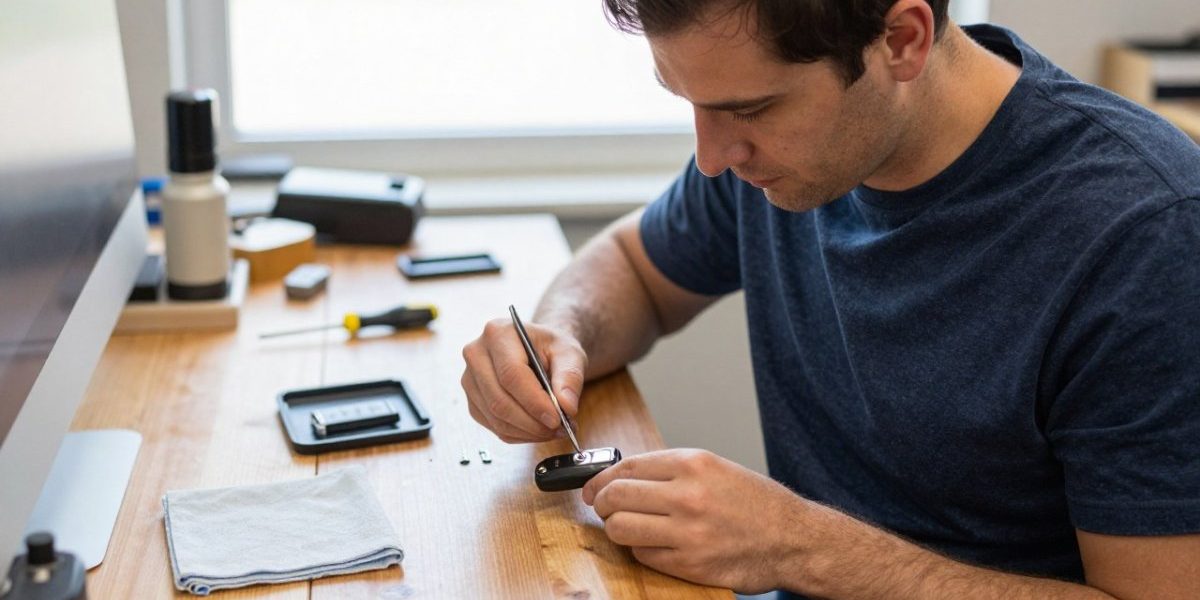
Last Updated: November 14, 2026
Quick Summary
A key fob reset is only needed when the remote stops talking to your car after a fresh battery goes in, since most fobs keep their pairing memory through a battery swap. If the buttons still work and the car starts, no reset is required. A reset earns its keep when the battery sat dead for weeks or months and the fob dropped its pairing.
- Match the number printed on the old battery, usually CR2032 or CR2025, since the sizes are not interchangeable.
- There is no single universal reset sequence; procedures change by make, model, and model year.
- Your owner’s manual is the only source guaranteed to match your exact model year.
- Confirm the fob’s indicator light responds before attempting any resync sequence.
- Call a locksmith when the fob still won’t pair after a good battery and a reset attempt.
Table of Contents
- Does the Key Fob Need to Be Reset After Changing the Battery?
- Why Won’t My Car Recognize My Key Fob After Changing the Battery?
- How Do I Resync My Key Fob to My Car?
- How to Reprogram a Key Fob After Replacing the Battery on a Toyota
- Checking That the Replacement Battery Is Installed Correctly
- When to Call a Professional Locksmith for Key Fob Programming
- Get Your Key Fob Working Again with Natick Finest Locksmith
- Frequently Asked Questions
Does the Key Fob Need to Be Reset After Changing the Battery?
Most of the time, no. A key fob reset is only needed when the remote stops talking to your car after a fresh battery goes in.
A common call is from someone who swaps the battery, finds the doors still won’t unlock, and assumes the fob is broken.
So when does a key fob reset actually matter? Two situations:
- The battery died and sat dead for a long stretch.
- The fob lost its signal and the car no longer recognizes it.
Below, we’ll show you how to tell the difference, plus reset steps that work on most cars.
When a Reset Is Actually Necessary
A reset becomes necessary when the car and fob stop recognizing each other. You’ll know because the buttons do nothing, even with a good battery.
Watch for these signs:
- The red indicator light on the fob stays dark when you press a button.
- The car won’t lock or unlock from a distance.
- The dashboard shows “key not detected” or “no key present.”
If you see these after a battery change, the fob likely lost its pairing. A resync usually brings it back.
When It Is Not
The fob does not need a reset just because you opened it. Most remotes hold their memory through a battery swap.
If the buttons still work and the car starts, you’re done, no reset, no trip to a shop.
One exception: if the battery was dead for weeks or months, the fob may have dropped its pairing. That’s the case where a reset earns its keep.
Why Won’t My Car Recognize My Key Fob After Changing the Battery?
In many cases, the car won’t recognize the fob because of a battery problem rather than a programming problem. The wrong battery type, a battery in backwards, or one not seated flat will all cause a dead remote.
A fob can look fine and still fail: the contacts may not touch, or the battery may be the wrong size for the slot. Rule out the simple stuff before blaming the car or the programming.
A Diagnostic Flow for Common Failure Causes
Work through this in order. Stop when the fob comes back to life.
- Check the battery type. Match the number printed on the old battery, usually CR2032 or CR2025. A wrong size means weak or no contact.
- Check polarity. The plus sign on the battery must face the same way as the old one. Flip it if you’re unsure.
- Check the seating. The battery should sit flat and snug, with no wobble.
- Check the contacts. Look for bent or dirty metal tabs inside the compartment.
- Test the indicator light. Press a button and watch for the red light.
- Try a resync. If the light works but the car doesn’t respond, move to the reset steps below.
If the fob still fails after all six, the issue may be the fob itself or the car’s receiver. If you’re locked out of your car, you can get emergency car lockout service near you.
Work through these checks in order and stop as soon as the fob comes back to life.
| Step | What to check | What to look for |
|---|---|---|
| 1 | Battery type | Match the number on the old battery, usually CR2032 or CR2025 |
| 2 | Polarity | Plus sign faces the same way as the old one |
| 3 | Seating | Battery sits flat and snug, with no wobble |
| 4 | Contacts | No bent or dirty metal tabs inside the compartment |
| 5 | Indicator light | Red light comes on when you press a button |
| 6 | Resync | Light works but car doesn’t respond; move to reset steps |
How Do I Resync My Key Fob to My Car?
Resyncing a fob means putting the vehicle into a pairing or relearn mode and then sending a signal from the fob so the car accepts it again. The important thing to understand before you try anything: there is no single universal reset sequence.
That is why the most reliable first step is not a YouTube sequence. It is your owner’s manual.
What a Resync Actually Does
A resync re-establishes the rolling-code handshake between the fob and the vehicle’s receiver. The fob and car share a changing code; each button press advances it. If the two fall out of step, a dead battery for a long period, a button pressed hundreds of times while out of range, or a replacement fob, the car may stop accepting the fob even though it’s transmitting.
The General Pattern Most Manual Procedures Follow
While the exact button presses and timing differ, most manufacturer procedures follow one of a few patterns. Use these only as orientation for reading your manual, not as instructions to try blind.
- Ignition-cycle relearn (older vehicles with a physical key): Cycle the ignition between OFF and ON a set number of times within a time window, then press a fob button. Timing is tight, often within seconds per step, and the sequence often must be repeated for each fob.
- Door and lock-cycle relearn: Some vehicles use the driver’s door lock switch, door open/closed state, and ignition position in a specific order. These are sensitive to whether the door is open or closed and to pause length between steps.
- Button-combination relearn: A few systems ask you to hold two fob buttons for a set period while the vehicle is in learn mode. This is common on aftermarket remote-start and alarm systems, which have their own programming and aren’t covered by the vehicle manual.
Watch out: don’t run an ignition-cycle or door-cycle sequence you found online more than once or twice on a vehicle you’re unsure about. Some procedures put the vehicle into a learn mode that times out, and repeated failed attempts can leave the system in an unexpected state.
Before You Attempt Any Sequence
Confirm three things first, because a resync cannot fix a hardware problem:
- The replacement battery is the correct type, installed with correct polarity, and seated flat (see the battery-installation section below).
- The fob’s indicator light responds when you press a button. If it stays dark, the problem is the fob or its battery, not the pairing.
- The vehicle battery is healthy. A weak car battery can prevent modules from entering learn mode and cause “key not detected” messages that look like a fob fault.
If all three check out and the manual procedure still fails, the next step is professional diagnosis, not more sequences. A locksmith with a programming tool can read whether the fob is transmitting and whether the vehicle is accepting the signal, telling you in minutes whether you need a resync, a repair, or a replacement.
How to Reprogram a Key Fob After Replacing the Battery on a Toyota
Toyota is a useful example because model-year differences matter more than brand-wide advice. Toyota has used several generations of remote keyless entry and smart-key systems, and the relearn method changed along the way.
That pattern isn’t unique to Toyota. It’s the single biggest reason generic “reset your fob” instructions fail: they ignore the model year. The table below isn’t a list of procedures, it’s a map of what to expect so you can find the right procedure in your manual instead of guessing.
What Changes by Era and System
- Older vehicles with a physical ignition key and separate remote buttons: Most likely to accept a manual ignition-cycle or door-cycle relearn. The procedure is usually in the owner’s manual under remote keyless entry, with timing often measured in seconds.
- Smart-key vehicles with push-button start: The fob communicates passively, and pairing is typically done with a scan tool. The manual will usually describe how to start the vehicle with a depleted fob battery (holding the fob against the start button, or placing it in a designated detection location), but that emergency start is not a relearn.
- Vehicles with a factory remote-start system: Remote start adds a separate module and its own programming path. A fob that starts the engine remotely may still need the remote-start system re-paired separately from the door lock functions.
How to Find the Correct Procedure for Your Vehicle
- Open the owner’s manual to the remote keyless entry or smart key section. If you don’t have the paper manual, the manufacturer’s owner’s site typically hosts PDFs by model year.
- Identify which system your vehicle has: physical key with remote buttons, smart key with push-button start, or a factory remote-start add-on. The manual’s wording will tell you.
- Follow the procedure exactly as written, including timing. Most failures come from pausing too long between steps or starting with the vehicle in the wrong state (door open vs. closed, ignition position, foot on brake).
- If the manual says the procedure requires a diagnostic tool or dealer equipment, believe it, that reflects how the immobilizer and smart-key modules are designed.
Watch out: don’t assume a sequence from a forum or video applies to your model year just because the vehicle name matches. The same nameplate can change systems mid-generation, and a procedure for the wrong year can leave the vehicle in a learn mode that times out or, rarely, temporarily disable remote functions until the system resets.
What to Have Ready Before You Call a Professional
If your manual procedure fails or your vehicle requires a scan tool, gather this before you call a locksmith or dealer:
- The vehicle’s year, make, model, and trim.
- Whether the vehicle has push-button start and whether it has a factory remote-start system.
- How many fobs you have and whether all of them need to work.
That information lets a technician tell you quickly whether you need a resync, a new fob, or a repair, and it prevents paying for programming that was never the problem.
Checking That the Replacement Battery Is Installed Correctly
The most common reason a fob fails after a battery change is simple: the battery is not installed correctly. A backwards battery or a loose one will kill the remote every time.

Here’s how to check your work:
- Battery type: The new battery must match the old one. CR2032 and CR2025 are not interchangeable.
- Polarity: The plus sign faces up or toward the cover, matching the old battery’s position.
- Seating: The battery sits flat in the slot with no tilt.
If the cover won’t close flat, the battery is likely the wrong thickness or not seated. Do not force it. Forcing the cover can crack the case or bend the contacts.
When to Call a Professional Locksmith for Key Fob Programming
Call a locksmith when the fob still won’t pair after a good battery and a reset attempt. Some cars need a scan tool only a shop has, and forcing it yourself can wipe the programming for good.
Before you hire anyone, protect yourself:
- Verify the locksmith’s credentials before you let them touch your car.
- Find a reliable local locksmith with clear pricing and a real address.
- Ask what a replacement fob costs before the work starts.
- If the fob is dead for good, learn how to get spare keys made and what it involves.
On cost: pricing depends on quantity, dates, and delivery, so ask for a quote or check the website for current prices.
Get Your Key Fob Working Again with Natick Finest Locksmith
A dead fob after a battery change is a common car lock problem, and it is often a quick fix in the right hands.
Natick Finest Locksmith offers:
- Fast response and same-day service with all necessary tools.
- Experienced technicians available for scheduled and emergency appointments.
- 24/7 availability for lockouts and key emergencies.
Call us and we’ll get your fob talking to your car again. Get started with Natick Finest Locksmith and drive off with a working remote.
If your car still won’t recognize the fob after a new battery and a reset, the pairing likely needs a professional tool.
Frequently Asked Questions
Does the key fob need to be reset after changing the battery?
Usually no. Most modern key fobs keep their programming in non-volatile memory, so a battery change does not erase the pairing with your vehicle. If the buttons work and the car starts normally, no key fob reset is needed. A reset or resync is only required when the fob stops communicating, the buttons do nothing, or the car displays a key not detected message after the new battery is in.
How do I resync my key fob to my car?
Start with the simplest method for your vehicle. On many cars, sit inside with doors closed, turn the ignition to ON (or press the start button without the brake), then press and hold the lock and unlock buttons on the fob for about 5 to 10 seconds. Some models require cycling the ignition from OFF to ON several times. Check your owner’s manual for the exact sequence, since the order and timing vary by make and model year.
Why won’t my car recognize my key fob after changing the battery?
The most common causes are a battery installed upside down, a battery that is the wrong type (for example a CR2025 where a CR2032 belongs), a battery not seated flat against the contacts, or a bent contact tab. If the battery checks out, the fob may have lost its pairing, the fob battery may be a low-quality cell, or the vehicle’s receiver may need a relearn procedure. A red indicator light that does not flash when you press a button usually points to a power problem inside the fob.
Can a locksmith reprogram a key fob?
Yes. A qualified automotive locksmith can test the fob, confirm whether the issue is the battery, the fob itself, or the vehicle’s receiver, and reprogram or replace the fob when needed. Call Natick Finest Locksmith if your fob still will not pair after you have checked the battery type, polarity, and seating.
