
Last Updated: October 28, 2026
Quick Summary
Choosing high security door locks means judging the cylinder, bolt, strike plate, and door as one system, not shopping by finish and price. Look for a Grade 1 deadbolt with a one-inch bolt throw, a reinforced strike using long screws that reach the framing, and a pick-, drill-, and bump-resistant cylinder.
- ANSI grades run 1, 2, and 3, with Grade 1 the highest cycle and strength rating.
- Builder strike plates use screws typically 3/4 inch long that grip only the soft jamb trim.
- A reinforced strike uses screws commonly 3 to 4 inches long that reach the wall framing.
- The strongest setup for most homes is a Grade 1 mechanical deadbolt plus a reinforced strike.
- Lubricate locks twice a year with dry PTFE or silicone, never graphite or WD-40.
Table of Contents
- What Separates High Security Door Locks From Standard Hardware
- High Security Deadbolt Features Worth Paying For
- Deadbolt vs Smart Lock Security: Which Wins on Your Front Door
- Key Control and Restricted Keyways for Landlords and Business Owners
- The Most Secure Front Door Lock Is Only as Good as Its Installation
- When to Rekey or Replace Door Locks
- Book a Security Assessment With Natick Finest Locksmith
- Frequently Asked Questions
What Separates High Security Door Locks From Standard Hardware
A high security door lock is engineered to resist forced entry, picking, drilling, and key duplication beyond builder-grade hardware.
Most people shop by finish and price, the wrong order. A polished handle on a hollow door with a short screw strike plate is decoration, not defense.
Here is a general framework:
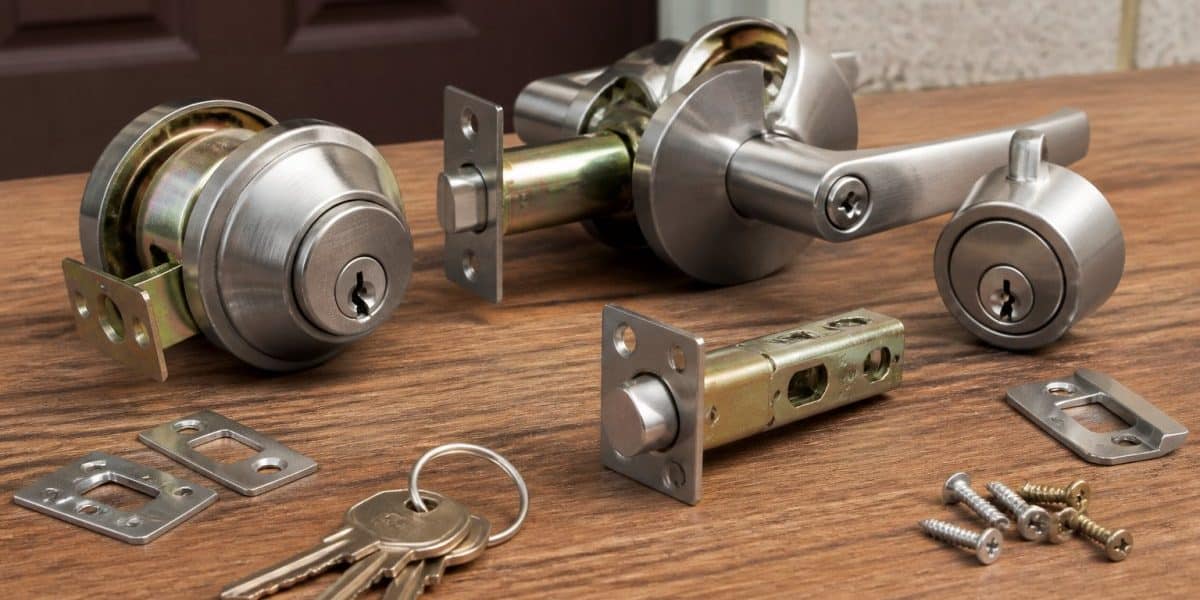
- Cylinder: the plug that accepts the key and houses the pins
- Bolt: the metal bar that enters the frame
- Strike plate: the reinforced receiver mounted in the jamb
Weakness in any one item caps the strength of the rest. Below: the standards, the features worth paying for, and where installation undoes good hardware.
ANSI Grades and BHMA Certification Explained
ANSI grades are durability and security ratings for door hardware, and BHMA certification is the testing program that verifies a product against them. ANSI sets the standard; BHMA administers testing.
Grades run 1, 2, and 3. Grade 1 is the highest cycle and strength rating, Grade 2 is mid-tier commercial, and Grade 3 is residential builder grade.
What most guides miss: the grade tests the lock’s endurance, not your door’s. A Grade 1 deadbolt in a soft pine jamb still fails under a kick.
Residential vs. Commercial Security Requirements
Homes and businesses face different threats. A residence is usually empty during the day with one primary entry. A commercial suite has staff turnover, multiple doors, and a legal duty to control who holds keys.
For homes, the priority is a solid deadbolt with a reinforced strike and a pick- and bump-resistant cylinder.
If you own rental property or manage a home, consider which front-door upgrades are appropriate for your needs.
High Security Deadbolt Features Worth Paying For
Some important lock features are not visible from the street. Bolt throw, strike reinforcement, and cylinder hardening do the work; cosmetic upgrades do not.
A common mistake is buying by brand reputation alone, the same brand sells Grade 1 commercial and Grade 3 residential hardware under one logo.
Bolt Throw, Strike Plates, and Door Reinforcement
Bolt throw is how far the deadbolt extends into the frame.
The strike plate is where cheap installations fail. Builder strikes use short screws that grip only the soft jamb trim; a reinforced strike uses long screws that reach the wall framing.
Door reinforcement means metal plates and longer fasteners that spread force across the door and frame. Durability starts with how the lock is anchored, not how it is finished.
Cylinder Upgrades: Pick, Drill, and Bump Resistance
The cylinder is the part an attacker attacks. Three resistances matter:
- Pick resistance: security pins and tight tolerances that defeat rake and pick tools
- Drill resistance: hardened steel inserts that stop a bit from reaching the pins
- Bump resistance: anti-bump pins that block the shock technique used on cheap cylinders
Look for hardened steel in the cylinder housing and a saw-resistant bolt. Anti-drill and anti-snap features are worth the premium because they raise the time and noise required to defeat the door, most intruders abandon a door that takes too long.
Deadbolt vs Smart Lock Security: Which Wins on Your Front Door
A quality mechanical deadbolt wins on raw physical security; a smart lock wins on control and visibility. The best setup for most homes is a smart lock paired with, not replacing, a Grade 1 deadbolt. Mechanical hardware has no firmware, battery, or radio, so it cannot be remotely attacked or bricked by a dead battery.
The right choice depends on four trade-offs:
- Failure mode: A mechanical deadbolt fails only if the mechanism breaks. A smart lock can fail from a dead battery, firmware bug, network outage, or server-side authentication failure. A fail-secure smart lock stays locked and may require a physical key override; a fail-safe lock unlocks, which suits fire egress but not a front door.
- Attack surface: A mechanical lock can be picked, bumped, drilled, or forced. A smart lock adds radio (Bluetooth, Z-Wave, Wi-Fi), firmware, and an app account. Each is a separate path in.
- Credential management: Mechanical keys can be copied unless you use a restricted keyway. Smart locks let you issue and revoke virtual keys instantly, which is a real advantage for rentals and shared entries.
The Cybersecurity Side of Smart Locks
Smart locks add risk mechanical hardware never had. A poorly secured lock can expose your entry schedule, and default credentials are a real weakness. Researchers have repeatedly shown many consumer smart locks ship with weak encryption or remotely exploitable cloud dependencies.
Practical safeguards:
- Change the default admin code the day you install it.
- Enable two-factor authentication in the companion app.
- Keep firmware updated; check the manufacturer’s security advisory page quarterly.
Biometrics are convenient, but a fingerprint reader is one more component that can fail in cold weather. Keep a physical key override.
A smart lock without a physical key override is a single point of failure. If the battery dies or the firmware crashes, you may be locked out until you call a locksmith. Always confirm the override exists and that you have the key stored outside the home.
Physical Security Features That Still Matter on a Smart Lock
A smart lock is still a deadbolt. Judge it on the same hardware criteria:
- ANSI/BHMA grade: Look for Grade 1 or Grade 2. Many smart locks are Grade 3, which is builder grade.
- Bolt throw: One inch minimum, fully seated into the strike.
- Cylinder: A smart lock with a standard cylinder can be picked or bumped like a cheap mechanical lock. Prefer a restricted keyway or hardened cylinder.
When a Mechanical Deadbolt Is the Better Choice
Choose a mechanical Grade 1 deadbolt when:
- The door is a primary security boundary and you want the fewest failure modes.
- You are securing a rental unit without managing firmware updates or app accounts.
- The door is exposed to extreme cold, where battery performance drops.
Choose a smart lock when:
- You need remote access control, audit logs, or temporary credentials for guests or contractors.
- You are willing to maintain firmware and batteries as part of your security routine.
- You pair it with a Grade 1 mechanical deadbolt on the same door, so the smart lock adds convenience without replacing the physical anchor.
The strongest front door setup for most homes is a Grade 1 mechanical deadbolt plus a reinforced strike, with a smart lock added only if you will maintain it. The smart lock is a control layer, not a replacement for physical security.
Key Control and Restricted Keyways for Landlords and Business Owners
For landlords, key control is the whole game. Standard keys can be copied anywhere, so a returned key proves nothing. Restricted keyways require a signed authorization card to cut a new key, so you know every copy in circulation.
For businesses, a master key system layers on top: one key opens the main entrance, staff keys open only their zones, and the master opens everything. Our commercial locksmith services include master key systems and restricted keyway installs.
The Most Secure Front Door Lock Is Only as Good as Its Installation
Installation decides the outcome. A Grade 1 deadbolt in a misaligned hole with short screws performs worse than a Grade 2 lock installed correctly. We see this constantly on service calls.
The usual failures:
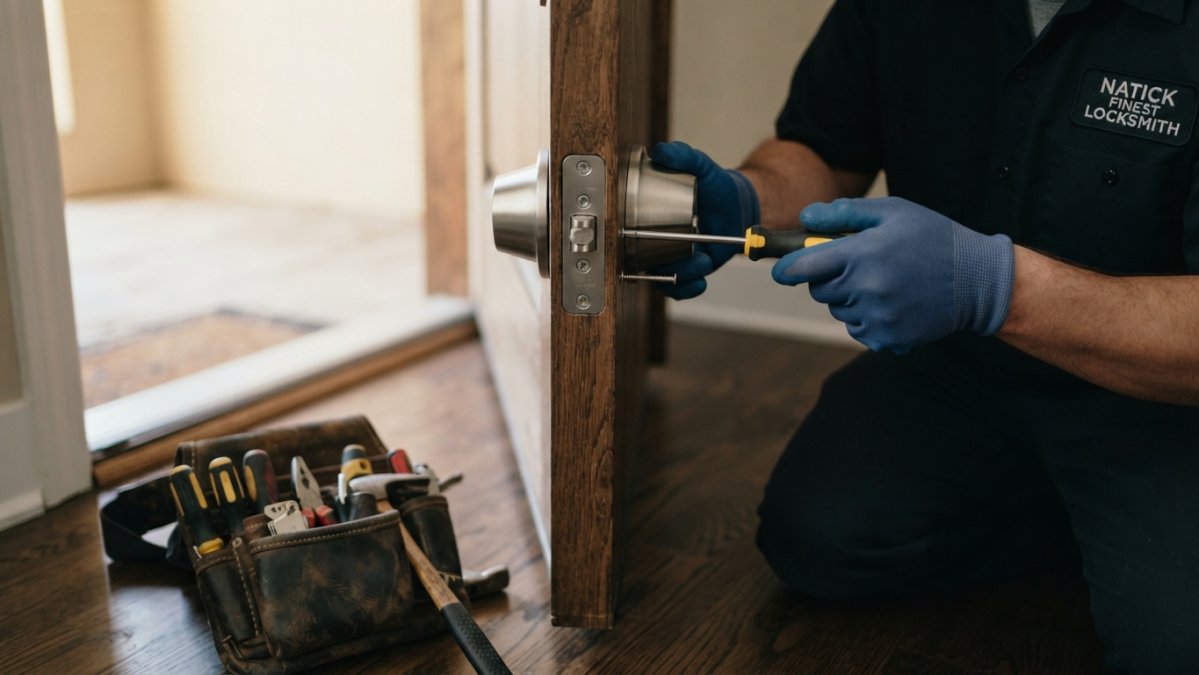
- Strike plate screwed into jamb trim only, with no reach into the framing
- Bolt hole drilled too shallow, so the bolt does not fully seat
- Door and frame out of square, so the bolt binds and never extends
Door Frame Reinforcement: The Weakest Point of Entry
Most guides focus on the lock hardware and ignore the door frame. That is backwards. The frame is where forced-entry attacks succeed. A deadbolt is only as strong as the jamb that receives it.
Three reinforcement details matter more than the lock brand:
- Strike plate screws: Builder strikes use screws typically 3/4 inch long that grip only the soft jamb trim. A reinforced strike uses screws long enough to reach the wall framing, commonly 3 to 4 inches.
- Jamb material: A hollow or soft pine jamb will split under a kick regardless of lock grade. Solid wood or metal-wrapped jambs distribute force better; if the jamb is soft, reinforcement plates are not optional.
- Kick-in resistance: A Grade 1 deadbolt and reinforced strike still fail if the door is hollow-core or the frame is not anchored to the studs. Check that the frame is shimmed and fastened into the rough opening, not just the drywall.
Before you upgrade the lock, inspect the strike plate. If you can see only two short screws holding it, the door is not ready for high-security hardware. Reinforcement comes first.
Installation Standards and What to Ask Your Installer
High-security hardware installed to manufacturer specifications outperforms the same hardware installed by feel. Ask your installer three questions:
- Will you replace the strike plate screws with fasteners that reach the framing?
- Will you check the door and frame for square before mounting the lock?
- Will you confirm the bolt seats fully into the strike without binding?
A locksmith who cannot answer these is installing hardware, not security. For more information, read our guide on why professional lock installation matters.
Maintenance and Lubrication That Keep Hardware Working
Locks need lubrication, but not the kind most people reach for. Graphite is wrong for most modern cylinders because it cakes with dust and grit.
Use a dry PTFE or silicone-based lubricant: a few short bursts into the keyway, then work the key several times.
Watch out: WD-40 is a solvent, not a lubricant. If your hardware already binds, our guide on preventing recurring lock mechanism issues provides more information.
Do not use graphite in a high-security cylinder. It can clog the security pins and cause the lock to fail at the worst possible time. Stick to dry PTFE or silicone.
When to Rekey or Replace Door Locks
Rekey or replace when control of the key changes, or when the hardware no longer meets the risk. Rekeying changes the pins so old keys stop working; replacement swaps the whole assembly.
Rekey when:
- A tenant moves out and you need the unit secured
- A key is lost or stolen
- You want one key for multiple doors
Replace when:
- The lock is Grade 3 builder hardware on an exterior door
- The cylinder is worn, loose, or corroded
- You are upgrading to a restricted keyway or smart lock
For landlords handling turnover across several units, our guide on rekeying multiple rental property units provides more information. A quick decision aid:
| Situation | Action | Why |
|---|---|---|
| Tenant turnover | Rekey | Cheapest way to retire old keys |
| Lost key with no restricted keyway | Rekey or replace | Standard keys can be copied anywhere |
| Builder-grade exterior lock | Replace | Grade 3 hardware caps your security |
| Moving to master key control | Replace | Requires compatible cylinders |
| Worn or binding cylinder | Replace | Rekeying worn hardware wastes money |
Book a Security Assessment With Natick Finest Locksmith
The gap between a lock that looks secure and one that holds under force is almost always installation and hardware grade, not brand.
Natick Finest Locksmith provides same-day service with all necessary tools, experienced technicians, and 24/7 availability for emergency and scheduled appointments. We provide code-compliant solutions.
Get started with Natick Finest Locksmith. Call now to schedule an assessment.
Frequently Asked Questions
What is the most secure type of front door lock?
A Grade 1 deadbolt with a 1-inch bolt throw, a reinforced strike plate, and a pick-resistant cylinder is the most secure option for most front doors. Pair it with a solid core or metal door and a reinforced frame. Smart locks can match that security if they carry the same ANSI rating, but the deadbolt hardware and the door itself still do the heavy lifting. Hardware grade matters more than brand or finish.
Are deadbolts more secure than smart locks?
A high security deadbolt usually beats a smart lock on physical resistance because it has no electronics to fail, no firmware to patch, and a simpler mechanism. That said, a smart lock with an ANSI Grade 1 rating and a hardened steel bolt can match a standard deadbolt. The real difference is key control and cybersecurity: smart locks add convenience but also add attack surfaces like app accounts, Wi-Fi, and Bluetooth pairing that need strong passwords and updates.
When should I rekey or replace door locks?
Rekey when the lock hardware is still solid but the keys are not fully under your control: after moving into a new home, after a tenant moves out, after a breakup or roommate change, or if a key goes missing. Replace the lock when the hardware is worn, the door has been forced, the cylinder is a low-grade builder model, or you want to move up to a high security deadbolt. Landlords managing several rentals can ask a locksmith about scheduling rekeying for multiple units.
What features should I look for in a high security deadbolt?
Look for an ANSI Grade 1 or Grade 2 rating backed by BHMA certification, a full 1-inch bolt throw, a hardened steel bolt that resists cutting, a reinforced strike plate with long screws into the stud, and a cylinder rated for pick, drill, and bump resistance. A restricted keyway adds key control so copies cannot be made without your authorization. Ask whether the deadbolt is installed with through-bolts, because a strong lock on a weak door frame still fails under force.
