
Table of Contents
- What to Do Before You Lose Your Only Key
- Car Key Replacement Cost: Locksmith vs. Dealership
- Transponder Key Programming: What Happens During the Process
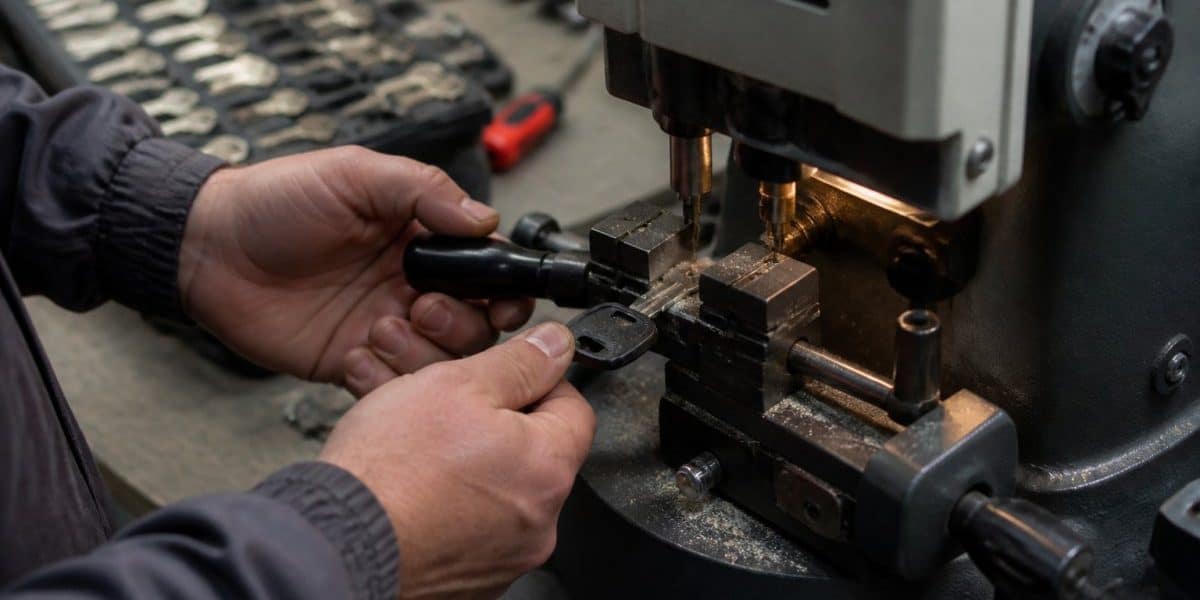
- Types of Car Keys and How Each One Is Made
- Mobile Locksmith Services vs. Dealership Service Departments
- Documentation You Need to Get a Spare Key Made
- Insurance, Warranty, and Security Risks to Know About
- Conclusion
- Frequently Asked Questions
Last Updated: September 30, 2026
What to Do Before You Lose Your Only Key
Getting spare car keys made before you need one is the smartest move any driver can make. A spare costs far less than an emergency replacement and saves hours of stress when your only key goes missing.
Getting a spare key made before you need it can save you from a more difficult and pricier fix later.
Here’s what to do right now, before anything goes wrong:
- Check whether your car came with a spare key when you bought it
- Store the spare somewhere safe, not in the glove box
- Test the spare at least once a year
- Write down your key code or VIN for future reference
- Get a replacement cut the moment you notice the spare is missing
That last point matters most. Once you lose your only key, your options shrink fast: you’ll pay for emergency service and may wait days for a dealership to order a matched key blank.
Never keep your spare key inside the car. Thieves know to check the glove box, center console, and magnetic hide-a-key boxes. A spare in the car turns a break-in into a stolen vehicle.
Car Key Replacement Cost: Locksmith vs. Dealership
Car key replacement cost depends on three variables: who does the work, the key type, and whether the immobilizer needs reprogramming. A mobile locksmith can often provide efficient service for the same job.
Dealerships order key blanks from the manufacturer, adding markup and shipping waits. A locksmith carries common blanks on the truck and cuts and programs on the spot.
| Factor | Mobile Locksmith | Dealership |
|---|---|---|
| Typical wait time | Same day | Several days |
| Key blank source | On-hand stock | Factory order |
| Programming | On-site | In-shop |
| Convenience | Comes to you | You drive there |
| Aftermarket options | Often available | OEM only |
| All-keys-lost jobs | Usually handled on-site | Often requires towing |
Rough Cost Tiers by Key Type
Exact pricing varies by make, model, and region. The cost of a spare key depends on the key type, the programming requirement, and the vehicle’s security system.
What Drives the Price of a Spare Key
Three things push the price up: the key type, the programming requirement, and the vehicle’s security system.
A basic metal key with no chip is cheapest to duplicate. A transponder chip, laser-cut key, or proximity key fob costs more because each needs special equipment to cut and pair.
The immobilizer is the other big factor. Newer cars won’t start unless the key’s chip matches a security code in the vehicle’s computer, and that pairing step is where most of the labor cost lives.
The All-Keys-Lost Premium
Losing every key is a different job from making a spare. With one working key, a locksmith can clone or add a second using the original as reference.
A spare made while you still have a working key is almost always the lowest-cost path. The all-keys-lost scenario adds towing, immobilizer reset, and sometimes a dealer-only security code on top of the key itself.
Call for a quote based on your specific car rather than relying on a generic estimate. Have your VIN and key type ready, that is what determines the number.
Transponder Key Programming: What Happens During the Process
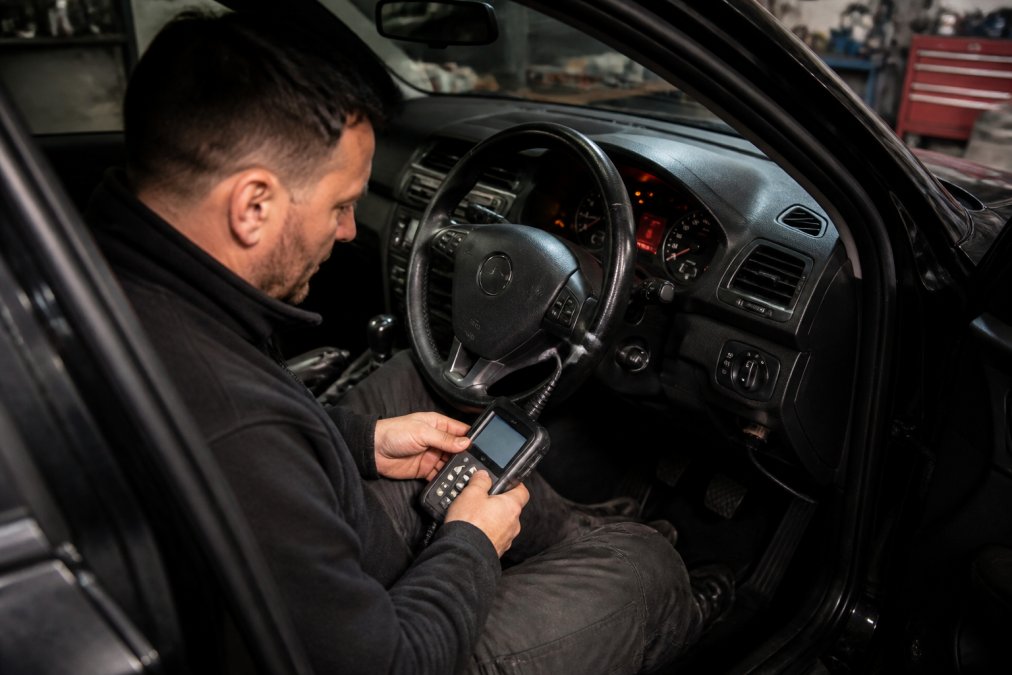
Transponder key programming pairs a new key’s chip with your car’s immobilizer so the engine will start. Without it, a freshly cut key turns in the ignition but the car won’t fire.
Why Programming Requires a Diagnostic Tool
A diagnostic tool is the only way to talk to your car’s computer. It reads the immobilizer system and confirms the new key’s chip.
Types of Car Keys and How Each One Is Made
Car keys fall into a few main types, each made differently. Knowing which type you have tells you what getting spare car keys made will involve.
- Traditional metal key: A plain cut key with no chip. Cheap and fast to duplicate.
- Transponder key: A metal key with a chip in the head. Needs programming.
- Remote head key: A transponder key with built-in lock buttons.
- Laser-cut key: Cut on the side with a high-security pattern. Needs a special machine.
- Proximity key fob: A push-to-start fob that talks to the car wirelessly. Needs pairing and often a fob battery replacement over time.
Mobile Locksmith Services vs. Dealership Service Departments
Mobile locksmith services offer convenience for many drivers.
- Locksmith: Comes to your home or office, same-day service, often lower cost
- Dealership: Factory parts, warranty-safe, but you drive there and often wait days
For a lost-key emergency, a mobile locksmith can provide same-day service.
If your car is still under a factory warranty, ask whether an aftermarket key affects coverage before you commit. Most warranties cover the vehicle, not the key, but it’s worth one phone call to be sure.
Documentation You Need to Get a Spare Key Made
Proof of ownership is required before any legitimate locksmith or dealer will cut a key, protecting you from key theft and vehicle theft.
Bring or have ready:
- Your vehicle registration or title
- A valid driver’s license matching the registration
- Your VIN (Vehicle Identification Number), usually visible on the dashboard or door jamb
- The key code if you have it
A locksmith who will cut a key without checking proof of ownership is a security risk. That same lax standard could let a thief get a key to your car.
Insurance, Warranty, and Security Risks to Know About
Most drivers never ask whether their auto policy covers a lost key, the single biggest blind spot in this topic, so start here.
Does Your Auto Insurance Cover Key Replacement?
Standard auto policies generally don’t cover a lost or broken key under comprehensive or collision, because a key isn’t part of the vehicle and losing it isn’t a covered peril. What often does cover it is an add-on:
- Roadside assistance / towing-and-labor coverage: Often bundled with a policy or sold as a rider. Many plans cover lockout service (getting you into the car) but not the cost of cutting and programming a replacement key. Read the exclusions.
- Mechanical breakdown / key replacement endorsement: Some insurers offer a specific endorsement that reimburses key replacement up to a capped amount per occurrence. This is the one that actually pays for a new fob.
- Auto-club memberships: Many include lockout service and, on higher tiers, a key-replacement benefit. The caps and waiting periods vary widely.
- Credit-card and extended-warranty perks: Some cards and vehicle service contracts include key replacement as a secondary benefit. Check the terms before assuming.
Warranty Implications of Using a Third-Party Locksmith
A factory warranty generally covers defects in materials and workmanship, not lost keys. Making a spare with an aftermarket key or third-party locksmith does not, by itself, void the vehicle warranty. What can cause problems is damage: if a technician damages the ignition cylinder, immobilizer module, or wiring during a botched job, that repair may not be covered because it wasn’t a manufacturing defect.
Security Risks of Third-Party Key Duplication
A key isn’t just metal, it’s a credential. Handing your key and vehicle to a provider means handing over access to your car’s security data.
The failure modes to watch for:
- Unverified duplication: A kiosk or shop that cuts a key without checking proof of ownership is a theft vector. If they will do it for you, they will do it for someone who is not you.
- Retained key codes: A provider who programs a key and keeps a copy of your key code or immobilizer data has effectively kept a copy of your key. Reputable shops do not retain this data.
- Unpaired or partially paired keys: A key that is cut but not properly paired can leave the immobilizer in a weakened state, and a cheap aftermarket fob may not support rolling-code security, making it easier to clone.
- Unvetted mobile operators: Anyone can advertise mobile key service. Ask for a business license, a physical address, and proof of insurance before you let them touch your car.
A Quick Decision Framework
- Still have one working key? Make a spare now with a licensed locksmith or your dealer. Cheapest path, no towing, no immobilizer reset.
- Lost all keys? Call your insurer first to see if key replacement is covered, then call a locksmith who handles all-keys-lost jobs on-site. Ask upfront whether your model needs a dealer-issued security code.
- Under factory warranty? Ask the dealer whether an aftermarket key affects coverage, and keep the receipt from any third-party work.
- Using a mobile provider? Verify license, insurance, and proof-of-ownership policy before booking.
Conclusion
Losing your only key turns a small task into an expensive emergency. The smart move is to get a spare made now, before you’re stranded.
Frequently Asked Questions
How much does it cost to get a spare car key made?
The cost depends on the key type and where you go. Always ask for a full quote upfront, including programming and any service call fees, so there are no surprises.
Can I get a spare car key made if I have lost my only key?
Yes, but the process is more involved. A locksmith or dealership will need your VIN (Vehicle Identification Number) and proof of ownership, such as your title or registration. They can cut a new key by code and program it to your immobilizer system. Expect to pay more than a simple duplicate because the original key cannot be copied. A mobile locksmith can handle this on-site.
Is it cheaper to go to a locksmith or a dealership for a spare key?
A locksmith can provide spare key duplication and transponder key programming. A mobile locksmith comes to you. For some vehicles, the dealership may be an option. Call both and compare the total price, including programming and taxes.
What information do I need to provide to get a spare car key made?
You will need your VIN, proof of ownership (title, registration, or insurance card), and a valid photo ID. The VIN tells the locksmith or dealer the exact key blank and security code for your vehicle make and model. Some providers also ask for the key code from your original key tag. Having these documents ready speeds up the process and ensures the new key is programmed correctly.